Football Position Numbers Explained: The Meaning of 1 to 11
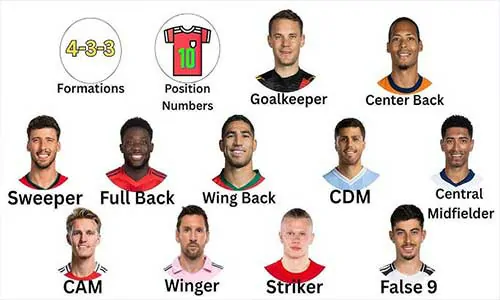
If you have ever listened to a football manager discuss tactical setups, you have likely heard them refer to a player as a “classic number six” or a “creative number ten.” While modern squad numbers range from 1 to 99, the traditional 1 to 11 numbering system remains the universal language of football tactics. To help you decode these conversations, we present this comprehensive guide, Football Position Numbers Explained: The Meaning of 1 to 11, which breaks down the history, tactical roles, and evolutionary changes behind every shirt on the pitch.
Understanding these roles is essential whether you are a casual fan, an aspiring coach, or an analyst. Historically, numbers were allocated based strictly on a player’s starting position in a 2-3-5 formation. However, as tactics evolved, these numbers transformed into symbols of specific responsibilities. Let us dive deep into the tactical manual and dissect the beautiful game’s numerical code.
Table of Contents
- The History of Football Numbers
- Quick Guide: 1 to 11 Positions at a Glance
- Football Position Numbers Explained: The Meaning of 1 to 11 Breakdown
- The Modern Evolution: Squad Numbers vs. Tactical Roles
- Frequently Asked Questions
The Historical Context of Football Position Numbers Explained: The Meaning of 1 to 11
In the early days of football, players did not wear numbers. The concept was first introduced in England in 1928 when Chelsea played Arsenal, though it was not officially mandated by the Football League until 1939. Consequently, numbering became a vital tool for referees, commentators, and fans to identify players on the pitch.
Originally, the standard tactical setup of the era was the “2-3-5” formation, also known as the “Pyramid.” In this system, numbers were assigned sequentially from the goalkeeper at the back to the left-winger on the opposite end. As formations shifted over the decades into the 4-4-2, the W-M formation, and modern variations like the 4-3-3, the numbers naturally adapted to represent specific zones. To appreciate how these systems overlap, we must analyze the specific positions assigned to each shirt number.
Quick Guide: 1 to 11 Positions at a Glance
To provide a quick overview before diving into details, the table below outlines the traditional roles associated with each number.
| Number | Traditional Position | Key Tactical Role | Iconic Examples |
|---|---|---|---|
| 1 | Goalkeeper | Shot-stopping, distribution, organizing defense | Manuel Neuer, Lev Yashin |
| 2 | Right Back | Defending the flank, supporting wide attacks | Gary Neville, Cafu |
| 3 | Left Back | Defending the flank, overlapping runs | Paolo Maldini, Roberto Carlos |
| 4 | Center Back / Defensive Midfielder | Physical defending, aerial dominance, distribution | Virgil van Dijk, Patrick Vieira |
| 5 | Center Back | Primary defender, marking, leadership | Carles Puyol, Franz Beckenbauer |
| 6 | Defensive Midfielder | Shielding defense, dictating tempo, breaking play | Sergio Busquets, Claude Makélélé |
| 7 | Right Winger / Midfielder | Creating width, crossing, scoring from wide areas | David Beckham, Cristiano Ronaldo |
| 8 | Central Midfielder (Box-to-Box) | Transitioning play, stamina, late box arrivals | Steven Gerrard, Andrés Iniesta |
| 9 | Striker / Center Forward | Primary goalscoring, holding up play, clinical finishing | Ronaldo Nazário, Robert Lewandowski |
| 10 | Attacking Midfielder / Playmaker | Creating chances, vision, key passes, dribbling | Lionel Messi, Diego Maradona |
| 11 | Left Winger / Midfielder | Speed, crossing, cut-backs, scoring from left flank | Ryan Giggs, Mohamed Salah |
Football Position Numbers Explained: The Meaning of 1 to 11 Breakdown
To fully grasp how these numbers dictate a team’s shape and tactics, we must examine each position individually. Each number carries unique expectations, defensive assignments, and attacking duties.
Number 1: The Goalkeeper (GK)
The number 1 is the only position that has remained completely unchanged throughout football history. By law, the goalkeeper is the last line of defense and the only player permitted to handle the ball within their penalty area. In modern tactics, however, the role of the number 1 has expanded significantly.
Furthermore, modern managers demand “sweeper-keepers” who are comfortable with the ball at their feet. Consequently, keepers like Alisson Becker or Ederson play a vital role in initiating attacks from the back, acting almost as an extra outfield player during possession phases.
Number 2: The Right Back (RB)
Traditionally, the number 2 was a rugged, defensive-minded player whose primary job was to stop opposition wingers. They rarely crossed the halfway line, focusing entirely on spatial awareness and physical tackling. However, modern systems have turned the right-back into a major attacking outlet.
In contemporary football, right-backs must possess incredible stamina to sprint up and down the pitch. They overlap the wingers, deliver precise crosses, and sometimes even invert into midfield to help dictate play, similar to Trent Alexander-Arnold’s hybrid role.
Number 3: The Left Back (LB)
Mirroring the right-back, the number 3 operates on the left side of the defense. Traditionally, left-backs were left-footed defenders tasked with neutralizing the opponent’s right-sided attackers. In addition, their defensive responsibilities required strong 1v1 defending skills.
Today, the number 3 is expected to provide width to the team’s attack. Players like Andy Robertson or Alphonso Davies use their explosive pace to overlap midfielders, stretch opposing defenses, and create scoring opportunities from the wide channels.
Number 4: The Center Back (CB)
In traditional British football, the number 4 was often worn by a commanding center-back who possessed great aerial ability and physical presence. Conversely, in European and South American systems, the number 4 sometimes pushed slightly forward into a defensive midfield role.
Nevertheless, in a standard 4-4-2 or 4-3-3 formation, the number 4 forms a central defensive partnership with the number 5. This player is responsible for organizing the defensive line, making crucial interceptions, and stepping out of defense to pressure opposing forwards.
Number 5: The Center Back (CB)
The number 5 is traditionally reserved for the leader of the defense. This player is the ultimate stopper, expected to block shots, win headers, and command the penalty box. They are usually the primary communicator on the pitch, ensuring the defensive line remains compact.
Furthermore, modern number 5s are expected to be calm under pressure. They must possess excellent passing ranges to launch counter-attacks or play short, accurate passes through the opponent’s pressing lines.
Number 6: The Defensive Midfielder (DM)
Often referred to as the “anchor” or the “pivot,” the number 6 sits directly in front of the central defenders. Their primary objective is to break up opposition attacks and shield the back four from danger. This requires elite tactical reading, positional discipline, and robust tackling.
In possession, the number 6 is the heartbeat of the team. They collect the ball from the defenders and distribute it to more creative players. Icons like Claude Makélélé defined this role so thoroughly that it is often referred to as the “Makélélé Role.”
Number 7: The Right Winger (RW)
Historically, the number 7 was worn by the classic right-winger. Their job was simple: hug the touchline, beat the opposing left-back with speed or trickery, and deliver high-quality crosses into the box for the strikers. David Beckham is a legendary example of this traditional style.
However, modern tactics have shifted towards “inverted wingers.” Players like Cristiano Ronaldo or Mohamed Salah revolutionized the number 7 role by cutting inside on their stronger left foot to shoot directly at goal, transforming the position from a pure creator to a prolific goalscorer.
Number 8: The Central Midfielder (Box-to-Box)
The number 8 is the engine room of the team, operating as a box-to-box midfielder. This player must possess a balanced skill set, contributing equally to defensive recovery and attacking plays. Stamina, dynamic movement, and passing accuracy are vital for this role.
Whether they are tracking back to help the number 6 or making late, surging runs into the opponent’s box to score, the number 8 bridges the gap between defense and attack. Legendry figures like Steven Gerrard and Frank Lampard perfectly exemplified this tireless work ethic.
Number 9: The Striker / Center Forward (ST)
The number 9 is the team’s chief goalscorer. Positioned highest up the pitch, they are expected to hold up the ball under pressure, make diagonal runs behind the defense, and finish chances inside the penalty box. Their success is almost exclusively measured by the number of goals they score.
While some modern systems employ a “false nine” who drops deep into midfield, the traditional, physically dominant number 9 remains highly sought after. Players like Erling Haaland represent the pinnacle of this lethal, direct attacking archetype.
Number 10: The Attacking Midfielder / Playmaker
Perhaps the most romanticized shirt in football, the number 10 is reserved for the creative mastermind. Operating in the “pocket” of space between the opponent’s midfield and defense, their primary goal is to unlock stubborn defensive lines with vision, flair, and delicate passes.
The number 10 possesses elite technical ability and spatial awareness. Consequently, they are given tactical freedom to drift across the pitch, creating overloads and taking long-range shots. Legends such as Diego Maradona, Lionel Messi, and Zinedine Zidane have immortalized this shirt.
Number 11: The Left Winger (LW)
Similar to the number 7, the number 11 traditionally played as a direct left-winger. Their primary objective was to stretch the opponent’s defense on the left side, using rapid acceleration to beat their marker and cross the ball with their left foot. Ryan Giggs is the quintessential traditional number 11.
In contemporary football, many left-wingers are also inverted, preferring to cut inside onto their right foot to combine with central midfielders or shoot. Regardless of the system, speed and 1v1 dribbling remain the defining characteristics of a modern number 11.
The Modern Evolution: Squad Numbers vs. Tactical Roles
While the traditional 1 to 11 system provides a brilliant framework for understanding roles, modern squad structures have evolved. Since the introduction of permanent squad numbers in major leagues during the 1990s, players are free to choose almost any number they desire.
For example, a modern defensive midfielder might wear number 41, while a star striker might wear number 18 or 99. Nevertheless, managers still use these traditional numbers to describe positional duties. When a coach says they need a “true number nine,” they are not referring to the shirt number itself; instead, they are describing a tactical profile of a physical, goal-scoring center forward.
Furthermore, tactical innovation has blurred the lines between these numbers. For example, modern full-backs (numbers 2 and 3) often act as playmakers, while central midfielders (number 8) might drop into the defensive line during build-up play. For more tactical breakdowns of modern football systems, resources like The Coaches’ Voice and FIFA offer deep insights into how these setups translate onto the global stage.
Frequently Asked Questions
What is a “False Nine” in football?
A “false nine” is an unconventional striker (traditionally wearing number 9) who drops deep into midfield instead of staying high up the pitch. This movement pulls opposing center-backs out of position, creating space for wingers (numbers 7 and 11) to run into the vacant area behind the defense.
Why do some defensive midfielders wear number 6?
The number 6 traditionally represents the deepest midfielder in a standard team lineup. Their primary job is to protect the defense, collect the ball from center-backs, and start attacks. Hence, “playing as a six” has become synonymous with being a defensive playmaker.
Can players wear numbers outside 1 to 11 today?
Yes, in modern professional football, players are assigned permanent squad numbers for the entire season. These can range from 1 to 99 depending on league regulations. However, the traditional numbers 1 to 11 are still highly coveted and usually given to the starting eleven players.
What is the difference between a number 8 and a number 10?
While both are central midfielders, a number 8 is a box-to-box midfielder who balances defensive duties with late attacking runs. In contrast, a number 10 is an attacking playmaker who stays high up the pitch, focusing purely on creating and scoring goals with minimal defensive obligations.
Who is the most famous number 10 in football history?
Historically, Pele, Diego Maradona, and Lionel Messi are widely considered the most famous players to wear the number 10 shirt. Their incredible vision, dribbling ability, and match-winning capabilities have made the number 10 the most iconic shirt in sports history.
Why is the goalkeeper always assigned number 1?
The goalkeeper was designated as the number 1 because the original numbering systems started from the back of the formation and moved forward. Since the goalkeeper is the deepest player on the pitch, they naturally received the first number.
Conclusion: Mastering the Language of Football Tactics
Ultimately, having the Football Position Numbers Explained: The Meaning of 1 to 11 in your tactical arsenal allows you to view the game through a professional lens. It transforms how you analyze a team’s lineup, understand a manager’s substitutions, and discuss match dynamics with fellow fans.
While squad numbers will continue to deviate from tradition, the tactical identity of these eleven numbers will always remain at the core of football strategy. If you want to deepen your understanding of the tactical side of football, start paying attention to how commentators use these numbers during the next match you watch!
What is your favorite positional number on the pitch, and which player do you think defines it best? Let us know in the comments below!