What Happens to Players’ Jerseys After Football Matches?
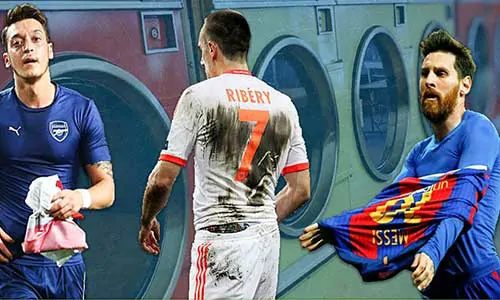
Millions of passionate fans around the globe watch football matches with pure excitement. When the final whistle blows, we see players celebrating, walking down the tunnel, or trading shirts. However, a common question remains: What Happens to Players’ Jerseys After Football Matches?
Indeed, these shirts carry the physical struggle of 90 minutes of intensive sport. Therefore, knowing what happens to players’ jerseys after football matches? helps us appreciate the massive administrative work that occurs behind the scenes of professional clubs.
Consequently, let’s dive into the fascinating world of kit managers, commercial contracts, and locker room traditions. This article will thoroughly explain the journey of these iconic items from the pitch to their final resting places.
Table of Contents
- The Secrets Behind What Happens to Players’ Jerseys After Football Matches?
- Club Protocols: What Happens to Players’ Jerseys After Football Matches?
- The Shirt Swap Tradition: What Happens to Players’ Jerseys After Football Matches?
- Financial Realities: What Happens to Players’ Jerseys After Football Matches?
- The Collectors’ Market: What Happens to Players’ Jerseys After Football Matches?
- Match Worn vs. Match Issued: What Happens to Players’ Jerseys After Football Matches?
- Modern Recycling: What Happens to Players’ Jerseys After Football Matches?
- Frequently Asked Questions (FAQs)
- Conclusion
The Secrets Behind What Happens to Players’ Jerseys After Football Matches?
To begin with, many fans believe that a player wears the same shirt for an entire season. In contrast, elite clubs have highly sophisticated kit management systems that operate on tight schedules.
So, what happens to players’ jerseys after football matches? On a typical matchday, the kit management team prepares multiple jerseys for every single player. Specifically, each player is usually allocated three shirts per match: one for the first half, one for the second half, and a backup for emergencies like blood stains or tearing.
Consequently, this means a Premier League squad alone uses dozens of shirts every single weekend. Understanding what happens to players’ jerseys after football matches? requires looking at the roles of the club’s logistics staff. These professionals ensure that every shirt is accounted for, whether it ends up in the laundry, a fan’s hands, or an opponent’s locker.
Furthermore, these shirts represent more than just clothing. They are highly tuned athletic gear, featuring lightweight fabrics, specialized ventilation, and bonded seams. Because of this high technical quality, they must be treated with care, both before and after the game.
Club Protocols: What Happens to Players’ Jerseys After Football Matches?
Once the final whistle blows, the fate of the shirts depends heavily on the level of the club. In lower-tier leagues, clubs may wash and reuse jerseys to save on tight budgets. On the other hand, in top-tier European leagues, jerseys are rarely worn more than once by the same player.
But what happens to players’ jerseys after football matches? For major clubs, the process begins in the dressing room. Players discard their sweaty shirts into large laundry bins. Subsequently, the kit staff collects these bins. If a shirt is destined to be reused, it is taken straight to the club’s specialized laundry room.
If you are curious about what happens to players’ jerseys after football matches? in terms of distribution, look at this standard allocation table:
| Shirt Type | Purpose / Timing | Final Destination (Post-Match) |
|---|---|---|
| First Half Shirt | Worn during the first 45 minutes. | Often swapped at half-time, given to fans, or sent to laundry. |
| Second Half Shirt | Worn during the second 45 minutes. | Swapped at full-time, auctioned, or kept for personal collections. |
| Backup/Emergency Shirt | Prepared for blood stains or tearing. | Returned to kit storage if unused, or reused in future games. |
Additionally, modern kit rooms are equipped with industrial-grade washing machines and eco-friendly detergents. Because grass stains, sweat, and mud can be incredibly stubborn, the laundry staff must work quickly. For games played away from home, the kit team will pack mobile laundry bags and transport them back to the club’s training ground. Consequently, the cycle begins anew for the next training session or fixture.
The Shirt Swap Tradition: What Happens to Players’ Jerseys After Football Matches?
One of the most historic and highly visible rituals is shirt swapping. The tradition originally dates back to 1931, when French and English players exchanged shirts as a sign of mutual respect. Since then, it has become a staple of global sportsmanship on the biggest stages.
When discussing what happens to players’ jerseys after football matches?, shirt swapping stands out as a key destiny for these garments. After a hard-fought battle, players swap shirts in the center of the pitch or privately in the stadium tunnels. Consequently, these exchanged jerseys become treasured keepsakes that represent their careers and competitive journeys.
Furthermore, these shirts often find a home in private collections. For example, legendary players like Lionel Messi have dedicated entire rooms in their homes to display shirts they received from rivals. Therefore, what happens to players’ jerseys after football matches? can often lead to a museum-grade collection in a legend’s private estate. These collections serve as physical archives of football history, mapping out a player’s path from their early days to global stardom.
Additionally, the etiquette of shirt swapping is strict. Players rarely swap jerseys during a match, and doing so at half-time is often frowned upon by fans and managers alike. Nevertheless, when the final whistle blows, the pitch turns into an exchange floor, where young players seek out their idols to claim a piece of footballing history.
Financial Realities: What Happens to Players’ Jerseys After Football Matches?
A common misconception is that wealthy football clubs simply absorb the cost of every shirt given away. In contrast, players are sometimes charged for the shirts they swap or throw to fans. This system prevents players from handing out excessive free merchandise to friends and acquaintances.
So, what happens to players’ jerseys after football matches? According to former Premier League goalkeeper Ben Foster, players receive a set quota of shirts per game, usually two. If they exceed this limit by swapping or throwing shirts into the crowd, the club deducts the cost directly from their weekly wages.
Therefore, if you ask what happens to players’ jerseys after football matches? from a financial perspective, it can actually cost the players quite a bit. For example, Foster estimated that Cristiano Ronaldo may have spent tens of thousands of pounds over his career just to pay for the shirts he gave away to fans and opponents. While this is a small drop in the ocean for a superstar’s bank account, it remains a strict operational rule for professional clubs.
On the other hand, lower-tier clubs enforce these rules even more strictly. For a club with a tight operating budget, buying hundreds of custom jerseys per season is a major expense. Consequently, players in leagues like League One or League Two are often expected to wear the same kit for multiple matches, unless a major event warrants a fresh set of shirts. Therefore, the financial reality shapes the physical path of the shirt.
The Collectors’ Market: What Happens to Players’ Jerseys After Football Matches?
There is a massive commercial industry built around match-worn football memorabilia. Consequently, some shirts are immediately earmarked for high-end charity auctions or specialized retail platforms. Fans and investors are willing to pay astronomical prices to own a piece of sports history.
So, what happens to players’ jerseys after football matches? If a shirt is worn during a historic match, such as a Champions League final, its value skyrockets. The club or the player may donate the jersey to raise funds for humanitarian causes. Ultimately, these auctions can raise hundreds of thousands of dollars for global communities in need.
For instance, Diego Maradona’s famous “Hand of God” shirt from the 1986 World Cup sold at auction for an astonishing £7.14 million. Similarly, a set of Lionel Messi’s 2022 World Cup shirts fetched $7.8 million. Thus, what happens to players’ jerseys after football matches? can sometimes result in multi-million dollar transactions that benefit global charities and private collectors alike. This lucrative market has led clubs to establish official partnerships with auction platforms, ensuring that fans can purchase authentic, verified match-worn gear directly from the source.
Additionally, modern technology has introduced digital authentication certificates. When a shirt is sold, it is paired with digital tracking codes to prevent counterfeiting. This system ensures that the buyer is receiving the exact garment worn by their favorite athlete, protecting the integrity of the market.
Match Worn vs. Match Issued: What Happens to Players’ Jerseys After Football Matches?
For serious collectors, understanding the terminology is vital. There is a massive difference between a “match-worn” jersey and a “match-issued” jersey. Knowing these details is critical when studying what happens to players’ jerseys after football matches? because the difference in value can be immense.
So, what happens to players’ jerseys after football matches? Match-worn shirts are those actually used on the pitch during active gameplay. These shirts frequently bear grass stains, mud, sweat, and sometimes blood. In contrast, “match-issued” shirts were prepared for the player but remained unused on the bench or in the dressing room throughout the 90 minutes.
Furthermore, collectors are often warned never to wash a match-worn shirt. This is because the dirt, sweat, and scuff marks are crucial for “photo-matching” authentication. This process compares high-resolution game photos with the fabric’s specific weave and dirt placement to prove the shirt’s on-pitch history. As a result, what happens to players’ jerseys after football matches? plays a massive role in preserving the item’s historical and monetary value.
Specifically, the technical differences between retail replica jerseys and player-spec jerseys are distinct. Replica jerseys are built for durability and comfort, whereas player-spec shirts are designed for maximum athletic performance. Because player-spec shirts feature lightweight heat-pressed badges and tighter cuts, they are more delicate and require careful handling by kit managers.
Modern Recycling: What Happens to Players’ Jerseys After Football Matches?
In recent years, sustainability has become a key focus for football clubs and sportswear manufacturers. Many global brands have introduced eco-friendly initiatives to construct team kits, recognizing the environmental impact of textile waste.
Therefore, what happens to players’ jerseys after football matches? If shirts are not swapped, auctioned, or kept by players, clubs often recycle them. Many modern kits are made from recycled ocean plastics, and unused or damaged shirts are sent back to manufacturers to be repurposed. Consequently, this helps clubs reduce their carbon footprint and promote a circular economy.
Additionally, some clubs partner with local community projects to distribute gently used gear. These initiatives provide kit and training wear to youth academies, school teams, and underserved communities. Consequently, what happens to players’ jerseys after football matches? can directly support grassroots football development and bring joy to aspiring young athletes around the world.
Ultimately, this green approach ensures that every garment is utilized to its full potential. By prioritizing sustainability, professional football is demonstrating that performance on the pitch does not have to come at the expense of the planet.
Frequently Asked Questions (FAQs)
To help you better understand the lifecycle of professional football apparel, here are detailed answers to the most common queries about what happens to players’ jerseys after football matches?.
1. Do football players get a new jersey for every match?
Yes, in elite professional football leagues, players are typically allocated multiple brand-new jerseys for every single match. This ensures they have clean shirts for both halves and emergencies, such as blood stains or physical tearing during game play.
2. Do players have to pay for the jerseys they swap?
Yes, many professional clubs have strict limits on the number of shirts a player can give away for free. If a player exceeds their allocated quota (usually two shirts per match), the cost of any additional jerseys is deducted directly from their wages.
3. Are match-worn jerseys washed before they are auctioned?
In most cases, match-worn jerseys sold to serious collectors are left unwashed. This is because dirt, grass stains, and sweat marks are essential for “photo-matching” authentication, which verifies that the player actually wore the shirt during the game.
4. What is the difference between match-worn and match-issued jerseys?
A match-worn jersey was actively used by a player on the pitch during a match. On the other hand, a match-issued jersey was officially prepared by the kit manager for a player to wear but remained unused in the dressing room or on the substitute bench.
5. How do collectors verify if a jersey is truly match-worn?
Verification relies heavily on “photo-matching” technology, checking unique print placements, scuff marks, and fabric creases. Additionally, certificates of authenticity (COAs) provided by the club or reputable auction houses provide solid proof of provenance.
6. What happens to the jerseys that are not swapped or auctioned?
If jerseys are not swapped, auctioned, or kept, they are typically returned to the club’s kit room. Depending on the club’s budget, they may be washed and reused for training, archived in club museums, or recycled to manufacture new sportswear.
Conclusion
In conclusion, the journey of a professional football kit is a complex process involving careful logistical planning, financial calculations, and historic traditions. When looking at what happens to players’ jerseys after football matches?, it is clear that these items represent far more than just activewear.
From the precise preparations of the club kit manager to the high-stakes world of sports memorabilia auctions, every shirt has its own story to tell. Whether a shirt is swapped as a sign of respect, auctioned to raise money for charity, or recycled to protect the environment, its lifecycle is a fascinating aspect of the modern game.
To learn more about official football kit guidelines, check out the FIFA Official Website. For the latest updates on football news and match analysis, visit BBC Sport.
We would love to hear your thoughts on this topic! Have you ever managed to get your hands on a match-worn jersey? What is your favorite shirt design of all time? Share your stories and leave a comment below to join the discussion!