Where Is FIFA World Cup 2026? Travel Guide for International Fans
The anticipation is finally over as the monumental sporting event of the decade is underway. As football enthusiasts from every corner of the globe prepare to witness the thrilling live action, one primary query stands at the forefront of everyone’s mind: where are the matches being held, and how can a fan seamlessly navigate across different borders? To assist you, this comprehensive resource, Where Is FIFA World Cup 2026? Travel Guide for International Fans, will provide everything you need to know. Specifically, we will cover host nations, cities, transit systems, and visa regulations to make your trip seamless.
Planning for a multi-country tournament of this magnitude requires extensive preparation. In addition to securing match tickets, international spectators must deal with distinct immigration systems, vast geographic distances, and varying transportation networks. Consequently, establishing a solid itinerary early is the key to enjoying this unprecedented cross-border festival. In this Where Is FIFA World Cup 2026? Travel Guide for International Fans, we break down every logistical detail to help you navigate North America during this historic event.
Table of Contents
Where Is FIFA World Cup 2026? Travel Guide for International Fans: The Joint-Host Revolution
For the first time in history, the tournament is jointly hosted by three North American giants: Canada, Mexico, and the United States. Spanning from the Pacific to the Atlantic, the event marks a revolutionary change in how international tournaments are played. A total of 48 teams will participate in 104 matches across 39 days, creating an unmatched atmosphere of global unity and athletic excellence. Therefore, knowing the layout of this massive continent is essential for any traveling supporter.
To begin with, the tournament structure distributes matches logically across three distinct regions: the West, Central, and East. This regional clustering is designed to minimize travel fatigue for both the competing national teams and the traveling fans. Nonetheless, the sheer scale of North America means that you might find yourself traveling thousands of miles between games. Consequently, having access to an authoritative guide like Where Is FIFA World Cup 2026? Travel Guide for International Fans is vital to coordinate your travel dates, flights, and match-day itineraries successfully.
Furthermore, each host country brings its unique footballing culture and heritage to the table. Mexico boasts an legendary football history, with the iconic Estadio Azteca becoming the first stadium to host matches in three separate World Cups. On the other hand, the United States offers state-of-the-art, high-capacity NFL arenas equipped with cutting-edge spectator technology. Meanwhile, Canada provides a diverse, welcoming atmosphere in its vibrant, multicultural metropolitan centers. To get the most out of your experience, keeping the core principles of the Where Is FIFA World Cup 2026? Travel Guide for International Fans in mind will help you plan your journey effectively.
Host Cities Breakdown: Where Is FIFA World Cup 2026? Travel Guide for International Fans
The tournament is spread across 16 world-class host cities, each chosen for its rich sports culture, modern infrastructure, and ability to handle thousands of international visitors. Specifically, the matches are hosted in 11 cities across the United States, 3 in Mexico, and 2 in Canada. Because the distances between these cities can be immense, understanding where your team is playing is the absolute first step in planning your trip.
Indeed, planning where to go during the tournament can feel overwhelming without structured information. To make this easier, we have compiled a comprehensive list of all host cities and their respective venues. Utilizing our Where Is FIFA World Cup 2026? Travel Guide for International Fans overview, you can plan your path across the three host nations effortlessly. Let us take a detailed look at the designated venues and their capacities in the table below.
| Host City | Country | Stadium Name | Capacity |
|---|---|---|---|
| Vancouver | Canada | BC Place | ~54,000 |
| Toronto | Canada | BMO Field | ~45,000 |
| Mexico City | Mexico | Estadio Azteca | ~87,500 |
| Guadalajara | Mexico | Estadio Akron | ~48,000 |
| Monterrey | Mexico | Estadio BBVA | ~53,500 |
| New York / New Jersey | United States | MetLife Stadium | ~82,500 |
| Los Angeles | United States | SoFi Stadium | ~70,000 |
| Dallas | United States | AT&T Stadium | ~80,000 |
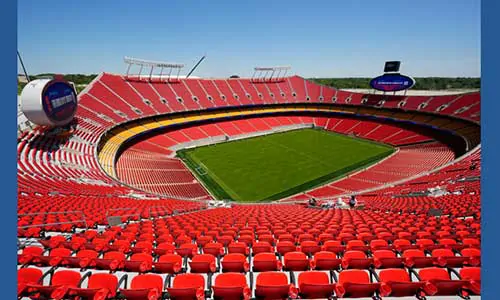
| Kansas City | United States | Arrowhead Stadium | ~76,000 |
| Miami | United States | Hard Rock Stadium | ~64,700 |
| Atlanta | United States | Mercedes-Benz Stadium | ~71,000 |
| Boston | United States | Gillette Stadium | ~65,800 |
| Philadelphia | United States | Lincoln Financial Field | ~69,000 |
| Houston | United States | NRG Stadium | ~72,000 |
| San Francisco | United States | Levi’s Stadium | ~68,500 |
| Seattle | United States | Lumen Field | ~69,000 |
As detailed above, the venues range in scale, with the famous Estadio Azteca in Mexico City leading in historical grandeur, while Dallas’s AT&T Stadium and New Jersey’s MetLife Stadium provide enormous capacities for major knockout stages. Consequently, traveling fans should plan which region they wish to focus on. Moreover, as you discover the cities using this Where Is FIFA World Cup 2026? Travel Guide for International Fans, you will see how each destination brings its own localized soccer culture.
Navigating Cross-Border Travel: Where Is FIFA World Cup 2026? Travel Guide for International Fans
One of the most complex aspects of attending this tournament is dealing with different international borders. Because Canada, Mexico, and the United States maintain entirely independent immigration and visa frameworks, a ticket to a match does not grant automatic entry into any country. Therefore, reading this section of the Where Is FIFA World Cup 2026? Travel Guide for International Fans carefully is absolutely vital for your preparation.
To begin with, you must verify the specific requirements based on your country of citizenship. Depending on your nationality, you may need up to three separate travel authorizations if you plan to follow your team across borders during the knockout phases. As emphasized throughout this Where Is FIFA World Cup 2026? Travel Guide for International Fans, preparing your documents early is highly recommended to avoid unexpected consular backlogs. Below is an essential breakdown of the immigration rules for each of the three host nations.
1. Entry Requirements for the United States
If you are traveling to the United States to watch matches, you must possess either a valid visitor visa or an approved travel authorization. Specifically, citizens of participating Visa Waiver Program (VWP) nations can apply online for an Electronic System for Travel Authorization (ESTA). On the other hand, non-VWP passport holders must apply for a standard B-1/B-2 visitor visa at a U.S. Embassy or Consulate.
Fortunately, to help ticket holders navigate long consular processing lines, a new system has been implemented. The FIFA PASS (Priority Appointment Scheduling System) is an opt-in process that allows ticket purchasers traveling to the United States to secure expedited visa interview appointments. Consequently, if you purchase tickets via the official portal, make sure to leverage this priority service. For further details on standard processing times and visa rules, you can consult the official U.S. Department of State Travel Website.
2. Entry Requirements for Canada
For matches held in Vancouver or Toronto, international visitors must comply with Canadian entry laws. Similar to the United States, travelers from visa-exempt countries must secure an Electronic Travel Authorization (eTA) prior to boarding their flight to Canada. Meanwhile, other passport holders are required to obtain a Temporary Resident Visa (TRV). It is highly recommended to submit visa applications months in advance of the tournament to avoid unexpected delays.
3. Entry Requirements for Mexico
Mexico provides relatively straightforward entry policies for many international fans. Notably, if you already possess a valid, unexpired visa or permanent residency for the United States, Canada, Japan, the United Kingdom, or any Schengen Area nation, you do not need a separate Mexican tourist visa to enter the country. However, you will still need to complete a Multiple Migratory Form (FMM) upon arrival. Conversely, if you do not hold any of these qualifying visas, you must apply for a Mexican tourist visa at a local consulate.
- Verify Passport Validity: Ensure your passport is valid for at least six months beyond your planned departure date.
- Keep Digital and Physical Copies: Keep copies of your tickets, hotel bookings, and visas saved offline on your phone as well as printed.
- Obtain Proper Visas Early: Apply for all necessary documents immediately upon securing your match tickets to avoid consular backlogs.
- Understand Land Border Rules: If crossing by land between the US, Canada, or Mexico, have your I-94 forms or land declarations ready online.
Transit Logistics: Where Is FIFA World Cup 2026? Travel Guide for International Fans
The vast distances separating host cities present a unique challenge for international fans. For instance, traveling from Vancouver in Canada to Miami in the southern United States is a distance of over 4,500 kilometers. This requires a five-hour flight! Therefore, establishing a clear strategy for regional transportation is just as critical as buying your tickets. In this section of our Where Is FIFA World Cup 2026? Travel Guide for International Fans, we explore the best methods for navigating the continent.
First and foremost, air travel will be the primary method for moving between distant host cities. Major international carriers and regional low-cost airlines offer numerous daily connections between the 16 host cities. To save money, it is highly recommended to book multi-city airline tickets well in advance. Furthermore, utilizing major airport hubs such as Atlanta (ATL), Dallas-Fort Worth (DFW), and Chicago (ORD) can offer cheaper flights and more flexible layover options.
On the other hand, for matches located within the same geographical clusters, alternative ground transport is highly practical. For example, cities in the Northeast United States—such as Boston, New York, Philadelphia, and Washington D.C.—are connected by the Amtrak rail network. This train system is highly efficient and lets you bypass long airport security lines. Moreover, high-speed regional buses can be an exceptionally budget-friendly option for shorter distances between nearby venues.
Additionally, local public transit systems within the host cities play a crucial role on match days. Most cities are offering dedicated stadium shuttles, expanded light rail lines, and discounted transit passes for ticket holders. To ensure a smooth experience, downloading local transit apps for each city you visit is highly recommended. Additionally, keeping the transport guidelines in this Where Is FIFA World Cup 2026? Travel Guide for International Fans active on your device will prevent unnecessary stadium delays. Below is a helpful summary of local transport options for several key host cities:
- New York/New Jersey: Utilize the NJ Transit trains directly from Penn Station to MetLife Stadium.
- Los Angeles: Take the Metro K Line to the LAX Transit Center and connect to dedicated stadium shuttles for SoFi Stadium.
- Mexico City: Use the Mexico City Metro and Light Rail (Tren Ligero) to arrive right outside the gates of Estadio Azteca.
- Vancouver: Take the SkyTrain directly to Stadium-Chinatown station for quick access to BC Place.
Secure Your Stay: Where Is FIFA World Cup 2026? Travel Guide for International Fans
With millions of visitors expected to descend upon North America, finding safe, comfortable, and affordable accommodation is a major concern. During a high-demand sporting event, hotel prices in major host cities can skyrocket. Consequently, traveling fans must think strategically to protect their wallets while ensuring they have a reliable place to sleep after an intense match day.
To begin with, booking your lodging as early as possible is the single most effective way to secure reasonable rates. If you wait until a few weeks before the match, you will likely face exorbitant prices and extremely limited options. In addition to traditional luxury hotels, alternative options such as short-term apartment rentals, hostels, and university dormitories (which are often vacant during the summer months) can offer substantial savings.
Furthermore, you do not need to stay in the heart of the host city. Choosing accommodation in neighboring towns or suburbs situated along major public transit routes can drastically reduce your lodging costs. For instance, if you are attending a game in Boston, staying in nearby Worcester or Providence and commuting via commuter rail can save you hundreds of dollars. By consulting this Where Is FIFA World Cup 2026? Travel Guide for International Fans, supporters can easily identify outer-city transport corridors that offer budget-friendly lodging.
Finally, traveling with a group of fellow supporters is an excellent way to split costs. Renting a large house or multi-room apartment allows you to share the expenses of lodging, groceries, and local transport. Additionally, group travel enhances the overall social experience, making your football adventure even more memorable. Ultimately, careful planning and flexibility in your destination choices are what make the difference between an expensive nightmare and a budget-friendly dream.
Logistics and Ticketing: Where Is FIFA World Cup 2026? Travel Guide for International Fans
Securing your match tickets is just the beginning; understanding how the ticketing system works and adhering to strict stadium regulations is vital for a hassle-free match day. All match tickets are delivered digitally through the official mobile application. Therefore, carrying a reliable smartphone with an active data connection is mandatory. In this portion of our Where Is FIFA World Cup 2026? Travel Guide for International Fans, we outline the fundamental rules you must follow when entering the venues.
Firstly, to guarantee entry and protect yourself from fraudulent sellers, you should only purchase tickets through official platforms. The official marketplace is the only secure venue to buy or resell tickets. If you purchase tickets from unauthorized third-party platforms, you risk being denied entry at the turnstiles. To access ticket sales, hospitality packages, and secondary market listings, always utilize the official Official FIFA Website.
Secondly, international fans must adapt to North American stadium rules, which can differ significantly from those in Europe or South America. Specifically, almost all host venues enforce a strict Clear Bag Policy. This means that traditional backpacks, large purses, and opaque bags are strictly prohibited inside the stadium. Supporters are only permitted to bring small, clear plastic bags or tiny clutch purses. Below is a checklist of critical match-day rules to keep in mind:
- Digital Tickets Only: Keep your mobile phone fully charged. Paper tickets or screenshots of mobile tickets are generally not accepted.
- Cashless Venues: Most modern stadiums in the US, Canada, and Mexico are entirely cashless. Make sure you have valid credit cards, debit cards, or mobile payment options (like Apple Pay or Google Pay) ready.
- Arrive Early: Security lines at these massive arenas can take hours during peak times. Aim to arrive at least 2 to 3 hours before kickoff to soak in the pre-match fan zone atmosphere and secure your seat comfortably.
- Prohibited Items: Fireworks, flares, professional camera gear, laser pointers, and large banners with political messaging are strictly forbidden at all matches.
By keeping these simple but important rules in mind, you can avoid stressful situations at the gate and focus on enjoying the beautiful game. Ultimately, respect for local security protocols, early preparation, and keeping updated with resources like this Where Is FIFA World Cup 2026? Travel Guide for International Fans will ensure that your trip to North America is filled with nothing but positive, lifelong memories.
Frequently Asked Questions (FAQ)
Before heading to North America, review this Where Is FIFA World Cup 2026? Travel Guide for International Fans FAQ section to address key concerns.
Which countries are hosting the FIFA World Cup 2026?
The tournament is jointly hosted by three nations: Canada, Mexico, and the United States. It features 16 host cities spread across the North American continent, containing a total of 104 matches.
Do I need a visa to travel between the US, Canada, and Mexico?
Yes. Each country maintains independent immigration laws. A ticket does not guarantee cross-border entry. You must secure an ESTA/Visa for the US, an eTA/Visa for Canada, and a Mexican FMM/Visa, depending on your nationality.
What is the FIFA PASS for visa applications?
The FIFA PASS (Priority Appointment Scheduling System) is an official program that helps ticket purchasers secure expedited tourist visa interviews at U.S. Embassies and Consulates.
How do I buy official match tickets?
Tickets must be purchased exclusively through the official FIFA ticketing portal. Avoid unofficial third-party platforms to prevent counterfeiting and entry rejection at stadium gates.
Are stadiums cashless, and can I bring bags?
Yes, almost all modern stadiums are completely cashless and enforce a strict Clear Bag Policy. Only small, transparent bags are permitted, and all purchases inside must be made via card or mobile payments.
How can I travel between the different host cities?
For long distances, regional flights are highly recommended. For closer clusters (like the Northeast US), passenger train networks such as Amtrak and inter-city express buses are affordable and efficient.