UEFA Champions League Winners List: Every Champion Since 1956
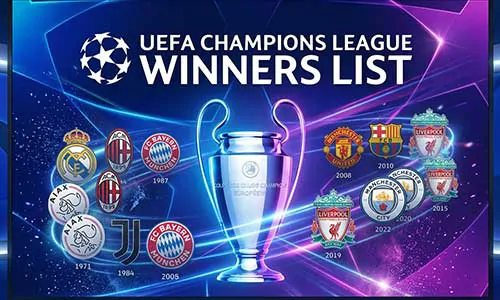
The quest for European football supremacy has captivated fans across the globe for generations. If you are a passionate football enthusiast looking for the definitive, up-to-date UEFA Champions League Winners List: Every Champion Since 1956, you have come to the right place. From its inception as the European Champion Clubs’ Cup to its current status as a multi-billion dollar global spectacle, this tournament represents the ultimate test of club talent, managerial genius, and mental fortitude.
Consequently, looking at the history of this tournament allows us to trace the evolution of modern football tactics and dynasties. In this comprehensive guide, we present the ultimate UEFA Champions League Winners List: Every Champion Since 1956, complete with deep historical analysis, club performance rankings, and a look at how recent tactical innovations have shaped the contemporary landscape of European football.
Table of Contents
- 1. The Historical Journey of the European Cup (1956–1992)
- 2. Rebranding and the Champions League Era (1993–2019)
- 3. The Contemporary Era: New Powerhouses (2020–2026)
- 4. Complete UEFA Champions League Winners List: Every Champion Since 1956
- 5. Club Rankings: Who Has Won the Most Titles?
- 6. National Dominance in European Football
- 7. The Evolution of the Format: From Knockouts to the Single-League System
- 8. Frequently Asked Questions (FAQ)
The Rise of European Football Dominance: UEFA Champions League Winners List: Every Champion Since 1956
To truly appreciate the UEFA Champions League Winners List: Every Champion Since 1956, one must understand its humble origins in the mid-1950s. Initiated by the French sports magazine L’Équipe and its editor Gabriel Hanot, the competition was created to identify the absolute best club on the European continent.
Initially, the tournament featured a direct knockout format where only the reigning domestic league champions were eligible to participate. During these developmental years, Spanish powerhouse Real Madrid established an unprecedented dynasty, claiming the first five consecutive titles from 1956 to 1960. Led by icons like Alfredo Di Stéfano and Ferenc Puskás, they set a standard of continental excellence that remains the benchmark to this day.
As the decades progressed, the names appearing on the UEFA Champions League Winners List: Every Champion Since 1956 began to change, reflecting structural shifts in national leagues. For instance, Portuguese giants Benfica broke the Spanish monopoly in 1961 and 1962 under the brilliant leadership of Béla Guttmann and the legendary Eusebio. Subsequently, Italian clubs revolutionized defensive structures with their famous Catenaccio system, resulting in triumphs for AC Milan and Inter Milan in the mid-1960s.
Furthermore, the late 1960s witnessed the arrival of Northern and Western European dominance. In 1967, Celtic’s famous “Lisbon Lions” became the first British club to lift the trophy, proving that teamwork and local talent could overcome seasoned tactical setups. Meanwhile, Manchester United followed close behind in 1968, securing an emotional victory a decade after the tragic Munich air disaster.
Key Milestones on the UEFA Champions League Winners List: Every Champion Since 1956
During the 1970s, the tactical framework of global football shifted permanently toward “Total Football.” Dutch side Ajax, spearheaded by the revolutionary Johan Cruyff, captured three successive titles from 1971 to 1973. This system prioritized fluid positional interchangeability, mesmerizing opponents and asserting a tactical dominance that would influence modern coaching for decades.
Consequently, Bayern Munich duplicated this remarkable achievement from 1974 to 1976. Led by the commanding presence of Franz Beckenbauer and the clinical goalscoring of Gerd Müller, the German giants proved that tactical discipline and physical robustness were equally vital for European success.
On the other hand, the late 1970s and early 1980s belonged almost entirely to English clubs. In addition to Liverpool’s dominant runs in 1977, 1978, and 1981, unexpected underdogs like Brian Clough’s Nottingham Forest achieved back-to-back miracles in 1979 and 1980. Aston Villa kept the English flag flying high by winning in 1982, solidifying an era of unmatched physical and mental dominance from the First Division clubs.
Rebranding and the Champions League Era (1993–2019)
In the 1992–93 season, UEFA rebranded the European Cup into the UEFA Champions League. This structural evolution profoundly impacted the UEFA Champions League Winners List: Every Champion Since 1956, as it transitioned from a pure knockout format into a tournament that included a round-robin group stage. Later, in 1997, UEFA began allowing runners-up from the strongest domestic leagues to participate.
Therefore, the competitive standard rose dramatically. The modern era became a battlefield of elite superclubs backed by growing commercial and television revenues. Real Madrid reasserted their historic pedigree by winning three titles in quick succession between 1998 and 2002. Meanwhile, Sir Alex Ferguson’s Manchester United claimed a dramatic, historic treble in 1999 with two injury-time goals against Bayern Munich, producing one of the most iconic moments in sports history.
In contrast, the 21st century saw tactical battles reach new heights. Pep Guardiola’s revolutionary tiki-taka Barcelona squad dominated in 2009 and 2011, establishing what many experts consider one of the finest club sides of all time. However, defensive resilience and swift counter-attacking play also had their moments of glory, as exemplified by Jose Mourinho’s Porto in 2004 and Inter Milan in 2010.
Moreover, Real Madrid achieved the seemingly impossible in the 2010s. Under the stewardship of Zinedine Zidane, they claimed three consecutive Champions League trophies from 2016 to 2018. This historic modern run cemented players like Cristiano Ronaldo into the absolute legendary lore of European football.
The Contemporary Era: New Powerhouses and Historic Retentions (2020–2026)
The contemporary era of European club football has been defined by rapid tactical evolution, high-pressing systems, and the emergence of ambitious new powerhouses eager to rewrite history. In 2020, Bayern Munich put together a flawless campaign during a challenging pandemic-disrupted season, securing their sixth title. Subsequently, Chelsea showcased the importance of defensive organization under Thomas Tuchel to lift the trophy in Porto in 2021.
On the other hand, established giants continued to show their resilience. Real Madrid fought through numerous dramatic comebacks to win their 14th title in 2022 and added a 15th crown in 2024 at Wembley Stadium, proving that their European DNA remains incredibly strong.
Meanwhile, the landscape of the tournament welcomed monumental first-time champions. Pep Guardiola finally guided Manchester City to a long-awaited historic treble in 2023, defeating Inter Milan in a tense final in Istanbul. This marked a turning point in modern football dominance.
However, the most dramatic shift in recent years came from France. In 2025, Paris Saint-Germain (PSG) claimed their long-sought, inaugural Champions League title with an emphatic 5-0 victory over Inter Milan in Munich. Proving this was no fluke, PSG successfully defended their crown in 2026. Under the guidance of Luis Enrique, they defeated Arsenal in a tense penalty shootout (4–3 after a 1–1 draw) in Budapest, becoming only the second club in the Champions League era to secure consecutive titles.
The Complete UEFA Champions League Winners List: Every Champion Since 1956
The following master table contains the definitive UEFA Champions League Winners List: Every Champion Since 1956. This comprehensive historical guide highlights the champions, runners-up, final scores, and the historic venues that hosted these legendary matches.
| Season | Winner | Score | Runner-up | Venue |
|---|---|---|---|---|
| 1955–56 | Real Madrid | 4–3 | Reims | Parc des Princes, Paris |
| 1956–57 | Real Madrid | 2–0 | Fiorentina | Santiago Bernabéu, Madrid |
| 1957–58 | Real Madrid | 3–2 (aet) | Milan | Heysel Stadium, Brussels |
| 1958–59 | Real Madrid | 2–0 | Reims | Neckarstadion, Stuttgart |
| 1959–60 | Real Madrid | 7–3 | Eintracht Frankfurt | Hampden Park, Glasgow |
| 1960–61 | Benfica | 3–2 | Barcelona | Wankdorf Stadium, Bern |
| 1961–62 | Benfica | 5–3 | Real Madrid | Olympisch Stadion, Amsterdam |
| 1962–63 | Milan | 2–1 | Benfica | Wembley Stadium, London |
| 1963–64 | Inter Milan | 3–1 | Real Madrid | Praterstadion, Vienna |
| 1964–65 | Inter Milan | 1–0 | Benfica | San Siro, Milan |
| 1965–66 | Real Madrid | 2–1 | Partizan | Heysel Stadium, Brussels |
| 1966–67 | Celtic | 2–1 | Inter Milan | Estádio Nacional, Lisbon |
| 1967–68 | Manchester United | 4–1 (aet) | Benfica | Wembley Stadium, London |
| 1968–69 | Milan | 4–1 | Ajax | Santiago Bernabéu, Madrid |
| 1969–70 | Feyenoord | 2–1 (aet) | Celtic | San Siro, Milan |
| 1970–71 | Ajax | 2–0 | Panathinaikos | Wembley Stadium, London |
| 1971–72 | Ajax | 2–0 | Inter Milan | De Kuip, Rotterdam |
| 1972–73 | Ajax | 1–0 | Juventus | Red Star Stadium, Belgrade |
| 1973–74 | Bayern Munich | 4–0 (Replay) | Atlético Madrid | Heysel Stadium, Brussels |
| 1974–75 | Bayern Munich | 2–0 | Leeds United | Parc des Princes, Paris |
| 1975–76 | Bayern Munich | 1–0 | Saint-Étienne | Hampden Park, Glasgow |
| 1976–77 | Liverpool | 3–1 | Borussia M’gladbach | Stadio Olimpico, Rome |
| 1977–78 | Liverpool | 1–0 | Club Brugge | Wembley Stadium, London |
| 1978–79 | Nottingham Forest | 1–0 | Malmö FF | Olympiastadion, Munich |
| 1979–80 | Nottingham Forest | 1–0 | Hamburg | Santiago Bernabéu, Madrid |
| 1980–81 | Liverpool | 1–0 | Real Madrid | Parc des Princes, Paris |
| 1981–82 | Aston Villa | 1–0 | Bayern Munich | De Kuip, Rotterdam |
| 1982–83 | Hamburg | 1–0 | Juventus | Olympic Stadium, Athens |
| 1983–84 | Liverpool | 1–1 (4–2 p) | Roma | Stadio Olimpico, Rome |
| 1984–85 | Juventus | 1–0 | Liverpool | Heysel Stadium, Brussels |
| 1985–86 | Steaua București | 0–0 (2–0 p) | Barcelona | Sánchez Pizjuán, Seville |
| 1986–87 | Porto | 2–1 | Bayern Munich | Praterstadion, Vienna |
| 1987–88 | PSV Eindhoven | 0–0 (6–5 p) | Benfica | Neckarstadion, Stuttgart |
| 1988–89 | Milan | 4–0 | Steaua București | Camp Nou, Barcelona |
| 1989–90 | Milan | 1–0 | Benfica | Praterstadion, Vienna |
| 1990–91 | Red Star Belgrade | 0–0 (5–3 p) | Marseille | Stadio San Nicola, Bari |
| 1991–92 | Barcelona | 1–0 (aet) | Sampdoria | Wembley Stadium, London |
| 1992–93 | Marseille | 1–0 | Milan | Olympiastadion, Munich |
| 1993–94 | Milan | 4–0 | Barcelona | Olympic Stadium, Athens |
| 1994–95 | Ajax | 1–0 | Milan | Ernst-Happel-Stadion, Vienna |
| 1995–96 | Juventus | 1–1 (4–2 p) | Ajax | Stadio Olimpico, Rome |
| 1996–97 | Borussia Dortmund | 3–1 | Juventus | Olympiastadion, Munich |
| 1997–98 | Real Madrid | 1–0 | Juventus | Amsterdam Arena, Amsterdam |
| 1998–99 | Manchester United | 2–1 | Bayern Munich | Camp Nou, Barcelona |
| 1999–2000 | Real Madrid | 3–0 | Valencia | Stade de France, Saint-Denis |
| 2000–01 | Bayern Munich | 1–1 (5–4 p) | Valencia | San Siro, Milan |
| 2001–02 | Real Madrid | 2–1 | Bayer Leverkusen | Hampden Park, Glasgow |
| 2002–03 | Milan | 0–0 (3–2 p) | Juventus | Old Trafford, Manchester |
| 2003–04 | Porto | 3–0 | Monaco | Arena AufSchalke, Gelsenkirchen |
| 2004–05 | Liverpool | 3–3 (3–2 p) | Milan | Atatürk Stadium, Istanbul |
| 2005–06 | Barcelona | 2–1 | Arsenal | Stade de France, Saint-Denis |
| 2006–07 | Milan | 2–1 | Liverpool | Olympic Stadium, Athens |
| 2007–08 | Manchester United | 1–1 (6–5 p) | Chelsea | Luzhniki Stadium, Moscow |
| 2008–09 | Barcelona | 2–0 | Manchester United | Stadio Olimpico, Rome |
| 2009–10 | Inter Milan | 2–0 | Bayern Munich | Santiago Bernabéu, Madrid |
| 2010–11 | Barcelona | 3–1 | Manchester United | Wembley Stadium, London |
| 2011–12 | Chelsea | 1–1 (4–3 p) | Bayern Munich | Allianz Arena, Munich |
| 2012–13 | Bayern Munich | 2–1 | Borussia Dortmund | Wembley Stadium, London |
| 2013–14 | Real Madrid | 4–1 (aet) | Atlético Madrid | Estádio da Luz, Lisbon |
| 2014–15 | Barcelona | 3–1 | Juventus | Olympiastadion, Berlin |
| 2015–16 | Real Madrid | 1–1 (5–3 p) | Atlético Madrid | San Siro, Milan |
| 2016–17 | Real Madrid | 4–1 | Juventus | Millennium Stadium, Cardiff |
| 2017–18 | Real Madrid | 3–1 | Liverpool | NSC Olimpiyskiy, Kyiv |
| 2018–19 | Liverpool | 2–0 | Tottenham Hotspur | Metropolitano, Madrid |
| 2019–20 | Bayern Munich | 1–0 | Paris Saint-Germain | Estádio da Luz, Lisbon |
| 2020–21 | Chelsea | 1–0 | Manchester City | Estádio do Dragão, Porto |
| 2021–22 | Real Madrid | 1–0 | Liverpool | Stade de France, Saint-Denis |
| 2022–23 | Manchester City | 1–0 | Inter Milan | Atatürk Stadium, Istanbul |
| 2023–24 | Real Madrid | 2–0 | Borussia Dortmund | Wembley Stadium, London |
| 2024–25 | Paris Saint-Germain | 5–0 | Inter Milan | Allianz Arena, Munich |
| 2025–26 | Paris Saint-Germain | 1–1 (4–3 p) | Arsenal | Puskás Aréna, Budapest |
Club Rankings Within the UEFA Champions League Winners List: Every Champion Since 1956
When studying the historical records of the tournament, it becomes instantly clear that certain clubs have established unparalleled dynasties. Let’s analyze the exact distribution of titles among the most successful clubs in Europe.
Currently, 24 different clubs have managed to lift the coveted European trophy. However, a tiny elite group dominates the highest tiers of the rankings. Below is a detailed breakdown of the clubs with multiple titles:
- Real Madrid (15 Titles): The undisputed kings of Europe, with triumphs spanning from the inaugural 1956 final to their recent success in 2024.
- AC Milan (7 Titles): Italy’s most decorated continental representative, famous for the legendary sides coached by Arrigo Sacchi and Carlo Ancelotti.
- Bayern Munich (6 Titles): The powerhouse of German football, famous for their mid-70s hat-trick and treble-winning campaigns in 2013 and 2020.
- Liverpool (6 Titles): England’s most successful European club, whose historic legacy includes the unforgettable “Miracle of Istanbul” in 2005.
- Barcelona (5 Titles): Creators of modern tactical masterclasses, heavily driven by the eras of Ronaldinho and Lionel Messi.
- Ajax (4 Titles): The pioneer of Total Football, which nurtured some of the greatest minds and players in the history of the sport.
- Manchester United (3 Titles): The first English club to win the title, achieving iconic wins in 1968, 1999, and 2008.
- Inter Milan (3 Titles): Masters of tactical discipline, securing historic consecutive titles in 1964 and 1965, and a historic treble in 2010.
- Juventus, Benfica, Chelsea, Nottingham Forest, Porto, Paris Saint-Germain (2 Titles each): These elite clubs have achieved the difficult task of defending their title or winning across multiple eras. Notably, PSG became the latest member of this elite club by winning back-to-back finals in 2025 and 2026.
National Dominance on the UEFA Champions League Winners List: Every Champion Since 1956
A breakdown of the UEFA Champions League Winners List: Every Champion Since 1956 by nation reveals clear regional eras of dominance. The footballing philosophies of different nations have taken turns holding sway over the continent.
In terms of total trophies won, Spanish clubs lead the pack, largely supported by Real Madrid’s extensive trophy cabinet and Barcelona’s Golden Era. Consequently, Spain boasts 20 titles. England follows closely behind with 15 titles, distributed across a record-setting six different clubs, highlighting the immense depth and competitive nature of English football history.
Meanwhile, Italian clubs have accumulated 12 titles, showcasing their historical mastery of defensive organization and tactical flexibility. Germany’s 8 titles reflect the country’s relentless pursuit of physical stamina, tactical counter-pressing, and structural consistency. France has recently climbed the ladder, now possessing 3 titles, with Marseille’s solitary 1993 win accompanied by PSG’s historic rise in 2025 and 2026.
Format Evolution: The Transition to the Single-League System
To fully understand the competitive nature of the tournament, one must look at how its structure has adapted to meet the demands of modern sports entertainment. From 1956 to 1992, the tournament was a pure knockout competition, presenting a highly unforgiving challenge where a single bad match could end a campaign.
However, the rebranding in 1992 introduced group stages to guarantee more high-profile matchups. In 2024, UEFA implemented its most radical structural change yet by introducing the “Swiss Model” single-league phase. This format replaced the traditional 32-team group stage with a single 36-team league table.
Under this system, each club plays eight matches against eight different opponents, with the top eight teams qualifying automatically for the round of 16. Consequently, the physical and tactical demands on squads have reached an all-time high, making achievements like PSG’s back-to-back triumphs in 2025 and 2026 even more extraordinary.
Conclusion: The Everlasting Legacy of the Champions League
Ultimately, looking at the UEFA Champions League Winners List: Every Champion Since 1956, we see a testament to sporting greatness, perseverance, and tactical evolution. From the early dominance of Real Madrid to the modern rise of clubs like Manchester City and Paris Saint-Germain, this tournament continues to write the most dramatic chapters in football history.
For more official statistics, real-time match databases, and historic archives, you can explore the official UEFA Website or check out detailed analytical lists on the Wikipedia Finals Database.
What do you think? Which club will rise to claim the next trophy and add their name to this illustrious list? Let us know your thoughts, predictions, and favorite Champions League moments in the comments below!
Frequently Asked Questions (FAQ)
Below, we answer some of the most frequently asked questions about the UEFA Champions League Winners List: Every Champion Since 1956 to give you a quick, comprehensive summary of its key milestones.
1. Which club has won the most UEFA Champions League titles?
Real Madrid is the undisputed leader in the history of the competition, having won the trophy a record 15 times.
2. Has any team won the Champions League back-to-back in the modern era?
Yes, Real Madrid famously achieved this by winning three consecutive titles from 2016 to 2018. More recently, Paris Saint-Germain (PSG) achieved back-to-back victories by winning their first title in 2025 and successfully defending it in 2026.
3. Which country has produced the most UEFA Champions League winners?
Spain leads with 20 titles (15 for Real Madrid and 5 for Barcelona), followed by England with 15 titles.
4. Who won the 2025 and 2026 UEFA Champions League finals?
Paris Saint-Germain (PSG) won both. They defeated Inter Milan 5–0 in the 2025 final in Munich, and defended their title in 2026 by defeating Arsenal on penalties after a 1–1 draw in Budapest.
5. When was the European Cup rebranded to the UEFA Champions League?
The competition was rebranded and restructured for the 1992–93 season, introducing a group stage and eventually expanding to include non-champions from top leagues.
6. What is the new Swiss-system format introduced in 2024?
Introduced in the 2024–25 season, the format expanded the tournament to 36 teams playing in a single-league phase. Each team plays eight different opponents, replacing the traditional four-team group stage.