Most Goals in Football History: Official Rankings and Records
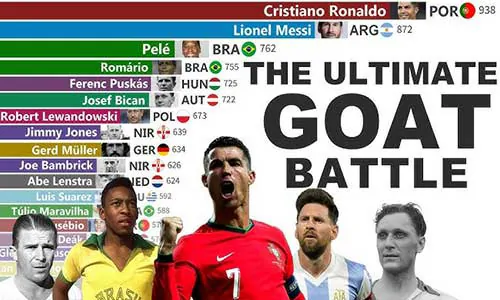
Table of Contents
- 1. Introduction: The Eternal Pursuit of Goals
- 2. The Great Goal-Counting Debate: FIFA vs. RSSSF vs. IFFHS
- 3. Most Goals in Football History: Official Rankings and Records
- 4. Cristiano Ronaldo: The Ultimate Goal Machine
- 5. Lionel Messi: The Playmaking Goalscorer
- 6. Josef Bican: The Forgotten King of Prague
- 7. Pelé: O Rei’s Disputed Masterclass
- 8. Romário and Ferenc Puskás: Clinical Pioneers
- 9. Active Contenders Chasing the Legends
- 10. Why These Scoring Records Might Never Be Broken
- 11. Frequently Asked Questions (FAQ)
- 12. Final Verdict on the Rankings
For over a century, the beautiful game has been defined by the ultimate act of finding the back of the net. While millions of players have graced the pitch, only an elite handful have achieved legendary status by scoring hundreds of career goals. When debating who is the greatest of all time, fans, analysts, and statisticians constantly look for the definitive list of the Most Goals in Football History: Official Rankings and Records. However, establishing these rankings is far more complex than it appears, as different organizations use varying methodologies to verify goals from different eras.
In the modern era, the tracking of statistics has reached unprecedented precision. Consequently, we can compare contemporary icons with historical giants with a high degree of accuracy. Despite this, controversies still linger around the career tallies of mid-20th-century superstars. This detailed guide explores the official numbers, the organizations that track them, and the stories behind the most prolific goalscorers the world has ever seen.
The Great Goal-Counting Debate: FIFA vs. RSSSF vs. IFFHS
To understand the rankings, we must first examine why statistical disagreements exist in football. Specifically, three major bodies attempt to standardize these records, often leading to differing conclusions. These are FIFA (the global governing body), the Rec.Sport.Soccer Statistics Foundation (RSSSF), and the International Federation of Football History & Statistics (IFFHS).
FIFA historically relied on official matches but has occasionally recognized historical figures using less stringent parameters. On the other hand, the RSSSF is known for its exhaustive archival research, documenting matches at all levels. This includes reserve teams, regional leagues, and wartime competitions. Consequently, their numbers for players like Josef Bican are much higher than those recognized by the IFFHS, which focuses strictly on top-level professional games.
Furthermore, the inclusion of friendly matches remains a highly debated topic. For instance, Brazilian legends like Pelé and Romário played numerous high-profile exhibition games. In their era, friendlies against European powerhouses were highly competitive and carried significant prestige. Therefore, while modern databases often omit these friendlies, the players themselves have always considered them part of their legitimate career totals.
Most Goals in Football History: Official Rankings and Records
To maintain fairness, the standard consensus for modern rankings relies on verified goals scored in official, top-level matches. This includes senior club career matches and category-A international fixtures. Below is the updated list of the all-time leading goalscorers in football history.
| Rank | Player | Country | Official Goals | Total Matches | Career Span |
|---|---|---|---|---|---|
| 1 | Cristiano Ronaldo | Portugal | 975+ | 1,290+ | 2002–Present |
| 2 | Lionel Messi | Argentina | 913+ | 1,160+ | 2003–Present |
| 3 | Pelé | Brazil | 762 | 846 | 1956–1977 |
| 4 | Romário | Brazil | 755 | 968 | 1985–2009 |
| 5 | Ferenc Puskás | Hungary | 746 | 754 | 1943–1966 |
| 6 | Josef Bican | Austria / Czechia | 743+ | 490+ | 1931–1955 |
| 7 | Robert Lewandowski | Poland | 695+ | 1,000+ | 2005–Present |
| 8 | Jimmy Jones | Northern Ireland | 647 | 614 | 1947–1964 |
| 9 | Gerd Müller | Germany | 640 | 716 | 1963–1981 |
| 10 | Abe Lenstra | Netherlands | 645 | 713 | 1936–1963 |
Note: Data is updated dynamically as active players continue to play. Tallies are restricted to top-level competitive matches.
Deep Dive into the Top Goalscorers
To truly appreciate these numbers, we must look beyond the statistics and analyze how these athletes redefined the art of scoring. Each epoch of football history presents unique challenges. Consequently, we must evaluate these players within their historical contexts.
Cristiano Ronaldo: The Ultimate Goal Machine
Cristiano Ronaldo is the undisputed leader in official goals in football history. The Portuguese icon has built his career on athletic preparation, clinical finishing, and incredible longevity. He has played in several of the world’s most demanding leagues, winning league titles and European cups along the way.
Starting his career as a tricky winger at Sporting CP, Ronaldo evolved into a devastating central striker at Manchester United and Real Madrid. His spell at Real Madrid remains his most productive, where he scored 450 goals in just 438 matches. In addition to his club achievements, Ronaldo is also the leading international goalscorer of all time, representing Portugal with over 145 goals. His pursuit of the historic 1,000-goal milestone is a testament to his drive, continuing to score regularly for Al Nassr and his national team well into his late 30s and early 40s.
Lionel Messi: The Playmaking Goalscorer
Lionel Messi is widely regarded as one of the most complete players in the history of the sport. Unlike traditional strikers, the Argentine maestro serves as both his team’s primary playmaker and its most lethal finisher. He spent the majority of his career at FC Barcelona, where he registered an astonishing 672 official goals.
Messi’s playing style relies on balance, ball control, and spatial awareness. Consequently, he has maintained a high scoring rate while also registering hundreds of assists. After a brief spell at Paris Saint-Germain, Messi moved to Major League Soccer with Inter Miami, where he continues to add to his career tally. On the international stage, Messi secured his legacy by leading Argentina to a Copa América title and a World Cup trophy, cementing his place in history with over 913 career goals.
Josef Bican: The Forgotten King of Prague
For several decades, Austrian-Czech striker Josef Bican was considered the highest goalscorer in football history. Active between the 1930s and 1950s, Bican possessed speed, bilateral shooting accuracy, and physical strength. He dominated the Czechoslovak leagues, especially with Slavia Prague, where he scored the majority of his career goals.
However, Bican’s exact record is highly disputed. Some archives, including the RSSSF, credit him with over 805, or even 950 official goals. This is because these databases include goals scored in second-division leagues, reserve matches, and regional wartime tournaments. When restricted strictly to top-tier professional matches, historians place his tally at approximately 743. Regardless of the criteria, Bican’s scoring ratio of over 1.5 goals per match remains one of the most efficient of all time.
Pelé: O Rei’s Disputed Masterclass
No discussion about football records is complete without mentioning Edson Arantes do Nascimento, universally known as Pelé. The Brazilian legend is the only player to have won three FIFA World Cups. His goals for Santos and the Brazilian national team defined an era of global football supremacy.
Pelé famously claimed to have scored 1,283 goals during his career. While this number is historically accurate, it includes goals from military service matches, friendly tours, and youth exhibitions. Critics often point out that these matches were not official competitive fixtures. Conversely, supporters argue that the friendly tours Santos embarked on in the 1960s were against elite European opposition like Real Madrid, AC Milan, and Benfica. Officially, the IFFHS and FIFA credit Pelé with 762 to 770 goals in top-level competitive matches, a record that stood for nearly half a century.
Romário and Ferenc Puskás: Clinical Pioneers
Romário was a master of penalty box positioning. The Brazilian striker had a long, nomadic career, representing clubs in South America, Europe, and Asia. Like Pelé, Romário celebrated his 1,000th career goal in 2007, though this number also included youth and unofficial matches. Officially, his competitive goal tally stands at 755, highlighting his status as one of the most natural finishers to ever play.
In addition, Hungarian icon Ferenc Puskás was the spearhead of the legendary “Magical Magyars” national team of the 1950s. Puskás possessed a legendary left foot and a high footballing IQ. He scored 84 goals in 85 matches for Hungary before moving to Real Madrid, where he continued to dominate European football well into his late 30s. His final official tally of 746 goals solidifies his legacy, with FIFA honoring his memory through the annual Puskás Award for the most beautiful goal of the year.
Active Contenders Chasing the Legends
In the modern era of highly structured defensive tactics, matching historical goalscoring ratios is an incredibly difficult feat. However, a few modern superstars continue to climb the all-time list, defying expectations through consistent performances at the highest level.
Robert Lewandowski is currently the closest active player to the all-time top five. The Polish forward has been a dominant force in German and Spanish football, particularly during his time with Bayern Munich and Barcelona. Known for his movement, positioning, and aerial ability, Lewandowski has comfortably surpassed the 690-goal mark and continues to perform at an elite level.
Similarly, Luis Suárez has enjoyed a highly productive career. The Uruguayan striker has scored over 600 goals across stints in Holland, England, Spain, and North America. While it is unlikely that these active veterans will catch Ronaldo or Messi, younger talents like Erling Haaland and Kylian Mbappé have shown the potential to challenge these records in the future, provided they maintain their high scoring rates over the next decade.
Modern Milestones and the Most Goals in Football History: Official Rankings and Records
The transition from the historical era to modern football has completely changed how career milestones are evaluated. Today, every single touch, pass, and goal is recorded in high-definition video and logged in central databases. This has eliminated the ambiguity that plagued the careers of Bican, Pelé, and Puskás.
Consequently, the race between Cristiano Ronaldo and Lionel Messi has become a highly documented statistical rivalry. Every goal scored by either player is scrutinized by millions of fans and verified by sports analytics companies. This level of transparency ensures that their positions at the top of the rankings are undisputed, setting a clear benchmark for future generations of players.
Why These Scoring Records Might Never Be Broken
Many sports analysts believe that the numbers generated by Ronaldo and Messi will remain untouched for decades. This theory is supported by several changes in how the modern game is played, prepared, and coached.
First, the physical demands of modern football have increased significantly. Players run greater distances at higher intensities than they did in previous eras. Consequently, players face a higher risk of muscle fatigue and injuries, making it difficult to maintain a 20-year career without significant physical drop-offs.
Second, modern tactical systems are highly organized. Coaches use video analysis, data tracking, and defensive structures designed to limit space for attackers. Unlike the open styles of the 1930s or the high-scoring matches of the 1950s, modern defenses rarely allow strikers to score multiple goals consistently week after week. Therefore, maintaining a career average of nearly a goal per game has become almost impossible at the elite level.
Frequently Asked Questions (FAQ)
1. Who has scored the most goals in football history?
As of 2026, Cristiano Ronaldo holds the record for the most official goals in football history, with over 975 goals scored for club and country in official competitive matches.
2. Does Pelé really have over 1,000 goals?
Yes, Pelé scored 1,283 goals during his career. However, this total includes goals scored in friendly matches, exhibition tours, and amateur tournaments. His official tally in competitive professional matches is verified at 762.
3. What is the difference between RSSSF and IFFHS records?
The RSSSF includes goals scored in reserve teams, regional leagues, and amateur levels in their broader lists. On the other hand, the IFFHS focuses strictly on top-level professional matches and senior national team fixtures, leading to more conservative and widely accepted official counts.
4. Why are Josef Bican’s goals highly disputed?
Josef Bican played during the World War II era, which disrupted official record-keeping. Some sources claim he scored over 805 or 950 goals by including matches played in regional war leagues and reserve divisions. His verified top-flight official total is around 743 goals.
5. Who is the highest-scoring defender in football history?
The Dutch legend Ronald Koeman holds the record for the most goals scored by a defender, finishing his illustrious career with 253 goals for clubs like Barcelona and PSV Eindhoven, alongside the Netherlands national team.
6. Will Cristiano Ronaldo reach 1,000 goals?
With over 975 official goals, Ronaldo is very close to the 1,000-goal mark. If he continues playing and scoring at his current rate for Al Nassr and Portugal, he is projected to reach this milestone in the near future.
Final Verdict on the Most Goals in Football History: Official Rankings and Records
Ultimately, the rankings of the highest goalscorers highlight the evolution of football over the past century. From the high-scoring eras of Josef Bican and Pelé to the tactically demanding modern era dominated by Cristiano Ronaldo and Lionel Messi, scoring goals remains the most difficult and celebrated task on the pitch.
While statistical debates will likely continue, the verified numbers provide a clear picture of these legendary players. The achievements of these goalscorers have raised the bar for what is possible in professional sports, inspiring future generations of footballers to chase their records.
What is your take on these rankings? Do you believe Pelé’s friendly goals should be included in the official count? Will we ever see another player reach the heights of Ronaldo and Messi? Share your thoughts in the comments below, and don’t forget to share this article with your fellow football fans!