Gegenpressing Explained: The High-Pressure Football Strategy
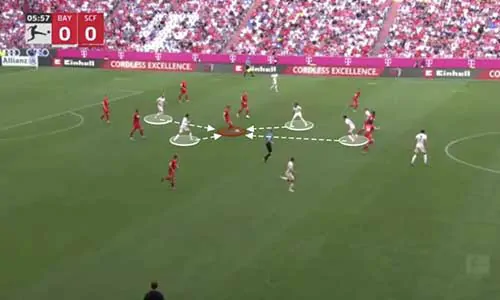
Modern football is defined by speed, transition, and spatial control. Among the tactical systems that have reshaped the global game over the last two decades, none has had a more profound impact than the intense defensive-offensive philosophy popularized in Germany. In this comprehensive guide, we provide Gegenpressing Explained: The High-Pressure Football Strategy to show how this tactical approach conquered European football, transformed defensive transitions, and became a staple of elite coaching manuals. Whether you are a tactical enthusiast, a coach, or a fan looking to deepen your understanding of the beautiful game, mastering this concept is essential to analyzing modern matches.
Table of Contents
- 1. What is Gegenpressing? The Philosophy of Counter-Pressing
- 2. The Origins of Gegenpressing Explained: The High-Pressure Football Strategy
- 3. How Gegenpressing Works: The Mechanics of the Five-Second Rule
- 4. Key Pressing Triggers in Defensive Transitions
- 5. The Different Styles of Gegenpressing
- 6. Tactical Comparison of High-Pressing Philosophies
- 7. The Physical and Mental Demands of High-Pressure Play
- 8. Why Gegenpressing Explained: The High-Pressure Football Strategy Dominates Modern Tactics
- 9. Tactical Antidotes: How Teams Counter the High Press
- 10. Implementing Gegenpressing Explained: The High-Pressure Football Strategy in Modern Coaching
- 11. Frequently Asked Questions (FAQ)
1. What is Gegenpressing? The Philosophy of Counter-Pressing
At its core, “Gegenpressing” is a German term that literally translates to “counter-pressing.” Rather than falling back into a structured defensive shape after losing possession, a counter-pressing team immediately attempts to win the ball back in the opponent’s half. The primary objective is simple yet highly sophisticated: exploit the opponent’s brief moment of disorganization.
Consequently, the transition phase becomes an offensive weapon. When a team loses the ball, the opposition is forced to shift from a compact defensive block to an expansive attacking shape. By suffocating the ball carrier immediately during this vulnerable shift, the counter-pressing team can regain possession close to the opponent’s goal, often catching their defenders out of position.
Additionally, this strategy minimizes the distance a team must travel to create a goal-scoring opportunity. Instead of defending deep, winning the ball, and building an attack over 80 yards, the pressing team aims to win the ball 20 yards from the opposition goal. Therefore, Gegenpressing is not merely a defensive tactic; it is an incredibly effective playmaker.
2. The Origins of Gegenpressing Explained: The High-Pressure Football Strategy
While the modern iteration of this system is heavily associated with German football, its roots stretch back several decades. To understand the evolution of this tactical phenomenon, we must look at the historical frameworks that laid the groundwork for modern high-intensity play.
In the late 1960s and 1970s, Dutch icon Rinus Michels developed “Total Football” with Ajax and the Netherlands national team. This system demanded extreme versatility from players, requiring constant position-switching and an aggressive, high defensive line. Simultaneously, Soviet manager Valeriy Lobanovskyi utilized scientific data and intensive physical conditioning at Dynamo Kyiv to implement a synchronized pressing system that choked space for opponents.
Furthermore, Arrigo Sacchi’s legendary AC Milan side of the late 1980s refined spatial defending. Sacchi emphasized a compact 4-4-2 block where the distance between the defensive and attacking lines never exceeded 25 meters. This spatial restriction made it incredibly easy to swarm opponents the moment they attempted to build from the back.
However, the modern codification of Gegenpressing Explained: The High-Pressure Football Strategy belongs to German pioneers like Ralf Rangnick and Jürgen Klopp. Rangnick, often referred to as the “Godfather of Gegenpressing,” revolutionized German football by moving away from the traditional sweeper system toward zonal marking and aggressive ball-oriented pressing. Klopp later popularized this with his “heavy metal football” at Borussia Dortmund and Liverpool, cementing the strategy’s status on the world stage.
3. How Gegenpressing Works: The Mechanics of the Five-Second Rule
Executing a successful counter-press requires absolute synchronization, tactical discipline, and exceptional spatial awareness. It is not simply a matter of chasing the ball blindly; rather, it is a highly coordinated collective movement. The fundamental benchmark for many pressing teams is the famous “five-second rule.”
This rule dictates that the moment possession is lost, the players closest to the ball must hunt it down with maximum intensity for five to eight seconds. If the ball is not recovered within this window, or if the opponent manages to escape the initial wave of pressure, the pressing team must quickly drop back into a compact mid-block to prevent being bypassed through long passes.
In order to make this rule work, several components must align:
- Proximity of Players: A team cannot press effectively if they are spread too far apart. Therefore, when in possession, the team must maintain a compact structure so that support is immediately available if a turnover occurs.
- Sub-Second Reaction Time: Players must anticipate turnovers before they even happen. A split-second delay in transition allows the opponent the time needed to find an open teammate.
- Squeezing the Space: The defensive line must push high up the pitch, reducing the vertical playing area and cutting off easy escape routes for the opposition midfielders.
4. Key Pressing Triggers in Defensive Transitions
An effective counter-press relies on specific cues, known as “pressing triggers.” These triggers signal to the pressing unit that an opponent is highly vulnerable and that pressure should be intensified instantly. Recognizing these triggers separates elite tactical teams from those that simply run hard.
The first major trigger is a poor first touch by the opposing player receiving the ball. If the ball bounces slightly away from their feet, they must look down to recover it, temporarily losing their peripheral vision. This is the optimal moment to swarm.
A second trigger is the physical orientation of the receiver. If an opponent receives the ball with their back to the play or facing their own goal, they cannot see the incoming defenders. Consequently, they are highly susceptible to blindside tackles and interceptive blocks.
Additionally, passing to technically weaker players or utilizing the touchline as an extra defender are common triggers. When an opponent is forced toward the sideline, their passing options are instantly cut in half, making it much easier for the pressing unit to trap them and force a turnover.
5. The Different Styles of Gegenpressing
Not all counter-pressing styles are identical. Depending on the manager’s philosophy and the squad’s profile, different variations of this tactical framework are employed. Understanding these nuances is crucial to appreciating the tactical depth of modern European football.
The Man-Oriented Press: In this variation, players immediately lock onto the closest opponents in their zone when possession is lost. The objective is to deny the ball carrier any immediate short passing options. While highly effective at forcing errors, it can leave spaces open if an opponent successfully dribbles past their direct marker.
The Space-Oriented (Leeway) Press: Popularized by Jürgen Klopp, this approach focuses on suffocating the space directly around the ball. The closest defenders swarm the ball carrier from multiple angles, creating a physical cage. The target is the ball itself rather than specific opposing players, aiming to overwhelm the ball carrier’s decision-making ability under extreme physical duress.
The Passing-Lane Press: This method, heavily utilized by Pep Guardiola’s teams, focuses on cutting off the passing avenues rather than directly tackling the ball carrier immediately. Players position themselves to block the lanes leading to influential midfielders or forwards. By closing these lanes, the opponent is often forced to play a risky long ball or make a lateral pass into a pre-planned defensive trap.
6. Tactical Comparison of High-Pressing Philosophies
To better understand how these styles differ in practice, the table below outlines the core attributes of the major high-pressure strategies used by elite football coaches.
| System Style | Primary Focus | Key Proponent | Main Tactical Objective |
|---|---|---|---|
| Space-Oriented | Suffocating the ball carrier & immediate space | Jürgen Klopp | Force an immediate mistake near the turnover zone |
| Passing-Lane Oriented | Intercepting passes by blocking pathways | Pep Guardiola | Control spatial options and regain possession cleanly |
| Man-Oriented | Strict marking of nearby receivers | Jupp Heynckes | Prevent any immediate short outlets for the ball carrier |
| Ball-Oriented | Overloading the direct vicinity of the ball | Ralf Rangnick | Outnumber opponents in the transition phase completely |
7. The Physical and Mental Demands of High-Pressure Play
Implementing a successful high-pressing system requires elite athletic conditioning. Because players must repeatedly sprint immediately after losing possession, their aerobic and anaerobic capacities must be developed to extraordinary levels. High-intensity running and rapid deceleration are core athletic markers of a successful counter-pressing squad.
On the other hand, the mental toll is often understated. Players cannot afford a single moment of complacency. They must maintain a state of “active anticipation” throughout the ninety minutes. If one midfielder or forward fails to engage in the press, the entire defensive structure can fall apart, leaving massive gaps behind them for the opponent to exploit.
Consequently, squad rotation and advanced sports science play a major role in modern high-pressure football. Clubs operating this strategy must carefully monitor player fatigue, muscle strain, and recovery metrics to avoid mid-season physical burnouts, which have occasionally plagued high-pressing teams in highly competitive leagues.
8. Why Gegenpressing Explained: The High-Pressure Football Strategy Dominates Modern Tactics
The dominance of this system in modern football is not accidental; it is rooted in tactical mathematics and defensive safety. By keeping the opponent under constant pressure in their own defensive third, the pressing team effectively keeps the threat as far away from their own goal as possible.
Furthermore, counter-pressing serves as a preventative shield. The quickest way an opponent can score is through a rapid counterattack when your own team is committed forward. By executing Gegenpressing Explained: The High-Pressure Football Strategy, you disrupt the counterattack before it can even begin. This proactive defensive mindset keeps the attacking team in control of the match’s tempo.
Additionally, modern tactical analyses show that goal-scoring opportunities generated from high turnovers have a significantly higher Expected Goals (xG) value. Because the opponent’s defense is disorganized during the transition, recovering the ball high up the pitch allows for direct, clinical vertical passing options that are far easier to convert into goals compared to breaking down a low block.
9. Tactical Antidotes: How Teams Counter the High Press
As with any dominant tactical system in football, opposing managers eventually develop effective countermeasures. Over the years, several strategies have emerged to bypass and neutralize even the most aggressive counter-pressing systems.
One highly effective method is the use of “press-resistant” players. Midfielders who possess exceptional close control, spatial awareness, and the ability to turn quickly under pressure can break the first line of the press. Players like Frenkie de Jong or Sergio Busquets are prime examples of individuals capable of turning away from pressure, instantly rendering the opponent’s high line vulnerable.
Another approach is utilizing a direct, long-ball strategy. By bypassing the midfield entirely and playing direct aerial passes to a physical target man or a fast winger running into the space behind the high defensive line, teams can completely ignore the congested mid-to-high pressing zones. For more on tactical evolutions, you can explore the technical analyses on The Athletic or review official coaching guidelines on UEFA’s official coaching platform.
Finally, the modern integration of the goalkeeper into the outfield buildup has changed the game. By having a goalkeeper who is exceptionally comfortable with the ball at their feet, the possession-based team can consistently create a “plus-one” numerical advantage in the deep build-up phase, making it far more difficult for the pressing team to execute a man-to-man press without leaving a dangerous gap elsewhere.
10. Implementing Gegenpressing Explained: The High-Pressure Football Strategy in Modern Coaching
For coaches looking to implement this philosophy, it is vital to understand that counter-pressing cannot be taught overnight. It requires consistent, repetitive training drills designed to build the cognitive habits of immediate reaction and spatial constriction.
Coaches typically utilize specialized “Rondo” drills where the dimensions of the playing area are tight, forcing players to adapt to immediate physical pressure. These drills are designed to reward quick combinations and prompt defensive players to swarm the ball the moment possession is lost. Transition games with small-sided goals are also excellent for instilling the “five-second rule” in young and professional players alike.
Ultimately, the success of the high-pressure system depends on collective belief. Every player on the pitch must buy into the system’s demands. When executed with precision, discipline, and elite physical fitness, counter-pressing remains one of the most exciting, effective, and visually captivating tactical frameworks in the history of football.
11. Frequently Asked Questions (FAQ)
Q1: What is the main difference between standard pressing and Gegenpressing?
Standard pressing can occur at any time during defensive play, often involving a team shifting into a pre-set defensive block before engaging the opponent. Gegenpressing, however, refers specifically to pressing *immediately* after losing possession during the transition phase, aiming to win the ball back within seconds before the opponent can organize an attack.
Q2: Who invented the Gegenpressing system?
While its roots lie in the Dutch Total Football of the 1970s and Valeriy Lobanovskyi’s Dynamo Kyiv, the modern concept was heavily developed and refined in Germany by tactical pioneers like Ralf Rangnick and later popularized worldwide by Jürgen Klopp.
Q3: Why is physical fitness so crucial for this high-pressure strategy?
Because the system requires players to perform frequent, high-intensity sprints immediately after losing possession, squads must possess elite cardiovascular endurance, rapid recovery rates, and high mental focus to maintain this tactical approach for a full 90-minute match.
Q4: Can any team play Gegenpressing successfully?
Not necessarily. It requires a specific profile of highly mobile, disciplined, and tactically intelligent players. Teams with slower defensive units or players who struggle with quick transitions may find themselves heavily exposed when their initial high-press is bypassed.
Q5: How do teams defend against a counter-pressing side?
Teams typically counter it by playing direct vertical balls over the pressing lines, utilizing press-resistant midfielders who can beat their markers, or relying on modern, ball-playing goalkeepers to maintain numerical advantages during deep build-up play.
Q6: Is Gegenpressing still effective in modern football?
Yes, it remains highly effective, though it has evolved. Modern elite teams often combine elements of intense counter-pressing with structured possession and defensive blocks to avoid physical burnout and manage energy levels throughout congested seasonal schedules.