Football Yellow and Red Cards Explained: Rules, Suspensions and History
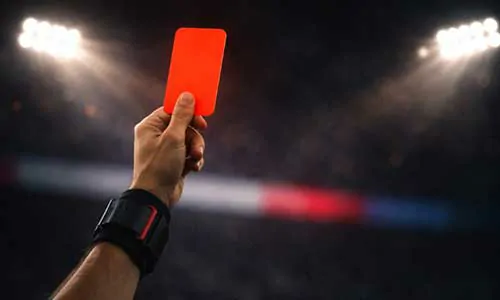
Whether you are a casual fan watching the World Cup or a seasoned player, understanding the disciplinary system in soccer is essential. In this comprehensive guide, we provide a deep dive into Football Yellow and Red Cards Explained: Rules, Suspensions and History to help you grasp how referees maintain order on the pitch. These colorful pieces of plastic are more than simple warnings; they are tools that shape match tactics, influence team lineups, and carry massive historical weight. Let us explore the rules, the history of their creation, and the severe consequences players face when they cross the line.
Table of Contents
- 1. The Origin Story of Yellow and Red Cards
- 2. Official Laws: Yellow Card Rules (Cautions)
- 3. Unpacking Direct Red Cards (Send-Offs)
- 4. Suspension Rules and Accumulation
- 5. Domestic vs. International Bans
- 6. Comparing Card Consequences (Comparison Table)
- 7. VAR and Modern Discipline
- 8. Frequently Asked Questions (FAQ)
- 9. Conclusion and Key Takeaways
The Origin Story – Football Yellow and Red Cards Explained: Rules, Suspensions and History
The history of football is rich and fascinating. For many decades after the modern rules of the game were established in England in 1863, officiating was a highly informal and verbal affair. Referees had to control players by shouting commands or using standard physical gestures. Consequently, as the game expanded globally, this system began to crumble under the weight of international competition. When examining how soccer evolved, looking at Football Yellow and Red Cards Explained: Rules, Suspensions and History reveals how the beautiful game transitioned from physical chaos to a structured, universally understood sport.
The absolute necessity for a visual system of discipline became glaringly obvious during the 1962 FIFA World Cup, hosted by Chile. In a notoriously violent match between Chile and Italy, later dubbed the “Battle of Santiago,” referee Ken Aston faced a nightmare scenario. He attempted to send off the Italian player Giorgio Ferrini for a malicious kick. However, because Aston did not speak Italian and Ferrini did not speak English, the player simply refused to leave the field. Play was halted for several minutes, and the situation only resolved when local police officers marched onto the pitch to physically escort Ferrini away. This incident demonstrated that verbal communication was completely inadequate for the global game.
Furthermore, the problem arose again at the 1966 World Cup in England. During a highly charged quarter-final match between the host nation and Argentina, the German referee Rudolf Kreitlein cautioned the English players Bobby and Jack Charlton. Because of the linguistic barrier, the brothers had no idea they had been booked. In fact, they only discovered the referee’s decision the next day when reading the morning newspapers. Additionally, the Argentine captain, Antonio Rattín, was sent off but refused to leave the field for several minutes, claiming he did not understand the referee’s commands. These high-profile communication breakdowns convinced football authorities that a non-verbal, universal language of discipline was desperately required.
The genius solution came to English referee Ken Aston while he was driving home from Wembley Stadium. As he stopped at a traffic light on Kensington High Street, London, the visual transition of the signals caught his eye. He realized that the universal meaning of traffic lights—yellow meaning “caution, take it easy” and red meaning “stop, you are off”—could be easily applied to the football pitch. Upon returning home, his wife Hilda enthusiastically helped him cut the first physical prototype cards from her sewing kit. Subsequently, Aston presented this elegant concept to the FIFA Referees’ Committee. The system was officially adopted and made its debut at the 1970 World Cup in Mexico, forever altering the landscape of sports officiating.
Official Laws of the Game: Football Yellow and Red Cards Explained: Rules, Suspensions and History
To fully appreciate the tactical side of soccer, one must understand the specific infractions that warrant a booking. Under Law 12 of the IFAB Laws of the Game, a yellow card is officially defined as a caution. It serves as a formal warning to a player that any further serious misconduct will result in their dismissal. According to the International Football Association Board (IFAB), having Football Yellow and Red Cards Explained: Rules, Suspensions and History makes it clear that cautions exist to protect player safety and maintain the game’s overall integrity.
Referees are instructed to brandish a yellow card for several distinct offenses on the pitch. First and foremost is unsporting behavior. This category is broad, encompassing dangerous play, reckless tackling, or committing a tactical foul to break up a promising counter-attack. Additionally, simulating an injury—commonly referred to as “diving”—or deliberately handling the ball to gain an unfair advantage fall under this umbrella. These actions compromise the spirit of fair play and are punished immediately.
Another frequent cause for a caution is dissent by word or action. In modern football, respect for match officials is paramount. Therefore, if a player argues aggressively, screams at the referee, or displays sarcastic gestures, they will immediately be booked. Moreover, persistent offenses are penalized in a similar manner. If a player repeatedly commits minor fouls, even if none of them are individually severe, the referee will issue a yellow card to punish the persistent nature of the misconduct.
Furthermore, delaying the restart of play is a highly common tactical offense. Players often waste time when their team is winning by kicking the ball away after a whistle, taking an excessively long time to perform a throw-in, or slowly walking off the pitch during a substitution. Referees are increasingly strict on these time-wasting tactics. Consequently, players must remain highly disciplined to avoid unnecessary cautions that can compromise their team’s defensive stability.
Other offenses include failing to respect the required distance during free kicks, corner kicks, or throw-ins. Players must stand at least ten yards away from the ball during a restart. If they deliberately block a quick free kick or encroach upon the space, they will receive an immediate yellow card. Finally, entering, re-entering, or deliberately leaving the field of play without the referee’s explicit permission will also result in an automatic booking.
Unpacking Direct Red Cards: Football Yellow and Red Cards Explained: Rules, Suspensions and History
While a yellow card acts as a serious warning, a red card represents the most severe disciplinary action a referee can take during a match. When a player is shown a red card, they are immediately expelled from the field of play, must leave the technical area, and cannot be replaced by a substitute. Consequently, their team is forced to play the remainder of the match with one less player. This is why understanding Football Yellow and Red Cards Explained: Rules, Suspensions and History is vital for predicting team strategies when players face immediate ejections, as playing with ten men drastically alters a manager’s tactical approach.
A referee will issue a direct red card for seven specific sending-off offenses. The first is serious foul play, which refers to any tackle or challenge that seriously endangers the safety of an opponent or uses excessive force and brutality. These are typically high-impact, studs-up challenges that carry a high risk of causing severe injury. Player safety is always the referee’s primary concern in these high-intensity moments.
On the other hand, violent conduct is penalized regardless of whether the challenge occurs during an active battle for the ball. Violent conduct includes punching, kicking, headbutting, or striking an opponent, teammate, or match official. Even if a player attempts to strike someone and misses, the intent alone warrants an immediate red card. Furthermore, spitting or biting any person on the pitch is considered highly offensive and will result in an instant dismissal along with severe long-term bans.
Another crucial rule is the denial of an obvious goal-scoring opportunity, commonly abbreviated as DOGSO. If an attacker has a clear run on goal and is fouled by a defender, the defender is sent off. However, the governing bodies introduced a modification to prevent “double jeopardy” inside the penalty box. If a defender makes a genuine, legitimate attempt to play the ball and commits a foul that results in a penalty kick, they are only cautioned with a yellow card. If the foul is a shirt-pull, push, or handball, the direct red card still applies.
Additionally, deliberately handling the ball to prevent a goal—such as an outfield player using their hands to block a shot on the goal line—results in an immediate red card. Lastly, using offensive, insulting, or abusive language or gestures towards anyone is an automatic sending-off offense. Finally, receiving a second yellow card in the same match results in an automatic red card, forcing the player off the pitch. Referees have no discretion in this scenario; the second caution must result in a dismissal.
Suspension Rules and Accumulation: Football Yellow and Red Cards Explained: Rules, Suspensions and History
The consequences of receiving cards extend far beyond the ninety minutes of a single match. Indeed, accumulated bookings and direct dismissals carry severe suspension rules that can derail a team’s entire season. When we study Football Yellow and Red Cards Explained: Rules, Suspensions and History, the financial and physical impact of suspensions on club squads becomes highly apparent, forcing managers to carefully rotate their players to keep key contributors active.
In domestic league football, such as the English Premier League, players face automatic bans for accumulating yellow cards. The threshold rules are strictly enforced throughout the campaign to encourage disciplined play:
- Five Cautions: If a player accumulates five yellow cards in their team’s first 19 league games, they receive an automatic one-match suspension.
- Ten Cautions: If a player picks up ten yellow cards before their team’s 32nd league game, they must serve a mandatory two-match suspension.
- Fifteen Cautions: If a player reaches fifteen yellow cards over the 38-game season, they are hit with a three-match ban.
These accumulation rules encourage disciplined play and protect players from aggressive, persistent fouling. On the other hand, red card suspensions are handled differently. A player sent off for a second yellow card or a professional foul (such as a standard DOGSO) receives an automatic one-match ban. However, a direct red card for violent conduct, serious foul play, or spitting carries a severe three-match suspension. This ban is enforced by national football associations, like The FA, which have the power to extend the punishment if the incident was particularly egregious. For instance, spitting offenses often result in a six-match ban and substantial financial fines.
Domestic vs. International Bans: Football Yellow and Red Cards Explained: Rules, Suspensions and History
The suspension dynamic changes completely when transitioning to short-form international tournaments, such as the FIFA World Cup or the UEFA European Championship. In these prestigious tournaments, player availability is the ultimate key to success. Under the updated regulations, receiving two yellow cards in separate matches results in an automatic one-match suspension for the following game.
However, to ensure that the tournament’s most exciting players are not suspended for the highly anticipated final, FIFA has introduced specific reset points. For example, during the World Cup, all single yellow cards are completely wiped and reset after the completion of the group stage, and then reset again after the quarter-finals. Consequently, a player carrying a single yellow card from the round of 16 and the quarter-finals will start the semi-final with a clean slate. Therefore, no player can miss the World Cup final due to yellow card accumulation. However, a red card received in the semi-final will still result in missing the final, as red card suspensions cannot be wiped. This balanced approach protects both the integrity of the competition and the safety of the players.
Comparing Card Consequences: Football Yellow and Red Cards Explained: Rules, Suspensions and History
To help you quickly understand the primary differences between these two disciplinary actions, we have created a comparative breakdown below. Our comprehensive analysis of Football Yellow and Red Cards Explained: Rules, Suspensions and History highlights the contrasting on-field and off-field impacts of each card.
| Disciplinary Metric | Yellow Card (Caution) | Red Card (Sending-Off) |
|---|---|---|
| Core Meaning | Official warning for minor misconduct. | Immediate expulsion from the match. |
| Immediate On-Field Impact | Player remains on the field but must play cautiously. | Player must leave the pitch; team plays a man down. |
| Primary Offenses | Tactical fouls, dissent, persistent fouling, time-wasting. | Violent conduct, serious foul play, spitting, DOGSO. |
| Subsequent Suspension | None immediately, unless accumulation threshold is met. | 1 to 3 matches minimum (can be extended for severe acts). |
| Can It Be Overturned? | No (except under highly specific VAR identity checks). | Yes, via post-match appeal or direct VAR review. |
VAR and Modern Discipline: Football Yellow and Red Cards Explained: Rules, Suspensions and History
The introduction of the Video Assistant Referee (VAR) has fundamentally transformed how modern discipline is administered. While the on-field referee remains the ultimate authority, VAR acts as a vital safety net to correct clear and obvious errors. Specifically, VAR can only intervene in four game-changing scenarios: goals, penalty decisions, mistaken identity, and direct red cards. Consequently, VAR cannot review standard yellow cards or second-yellow dismissals, unless a direct red card offense was missed.
Recent updates to the sport’s regulations, such as VAR interventions for card reviews, show why keeping Football Yellow and Red Cards Explained: Rules, Suspensions and History updated is crucial for players and fans alike. For instance, if a referee mistakenly issues a red card to the wrong player, VAR will step in to correct the error. Furthermore, during international tournaments, VAR technology has become highly sophisticated, utilizing semi-automated systems to track player movements and off-side lines, ensuring that offside-related DOGSO decisions are incredibly precise.
In addition to technological advancements, football’s governing bodies have introduced rules to curb toxic behavior. A prominent example is the strict penalty for players who cover their mouths to hide verbal abuse during a confrontation. Referees are now empowered to issue yellow or red cards if they suspect a player is using offensive language while hiding their face. This emphasizes the sport’s commitment to maintaining a respectful environment, ensuring that the visual card system remains a symbol of fair play and clear communication.
Frequently Asked Questions: Football Yellow and Red Cards Explained: Rules, Suspensions and History
To make this guide as helpful as possible, we have summarized key elements of Football Yellow and Red Cards Explained: Rules, Suspensions and History in our frequently asked questions below. These quick answers address the most common queries fans have about discipline in the beautiful game.
Can a player get a red card without receiving a yellow card first?
Yes, absolutely. A referee can show a direct red card (also known as a straight red) for severe offenses like violent conduct, serious foul play, spitting, or denying an obvious goal-scoring opportunity. A player does not need to have a prior yellow card to be sent off if the infraction is sufficiently severe.
Do yellow cards carry over from domestic leagues to European competitions?
No, they do not. Yellow card accumulations are tracked entirely separately within each competition. Consequently, a player who accumulates five yellow cards in the Premier League will serve a suspension in domestic league matches, but this will not affect their eligibility to play in the UEFA Champions League or Europa League.
What happens if a goalkeeper receives a red card?
If a goalkeeper is sent off, the team must immediately play with ten men. The manager has two tactical choices. They can substitute an outfield player for a backup goalkeeper, or if the team has already used all of their permitted substitutions, an outfield player must wear a goalkeeper jersey and play in goal for the remainder of the match.
Can team managers, coaches, and bench staff receive cards?
Yes. Under modern rules, referees have the authority to issue yellow and red cards to team officials in the technical area. This includes managers, assistant coaches, and substitutes. If a manager receives a red card, they must immediately leave the pitch area and cannot communicate with the team during the match.
Who was the first player to receive a red card in World Cup history?
Although yellow and red cards were introduced at the 1970 World Cup in Mexico, no player was actually sent off during that tournament. The first red card in World Cup history was shown four years later, during the 1974 World Cup in West Germany, to Chilean player Carlos Caszely in a match against the host nation.
What is the “double jeopardy” rule regarding penalty kicks and red cards?
The double jeopardy rule was introduced by IFAB to prevent teams from being excessively punished. If a defender commits a foul inside the penalty box that denies an obvious goal-scoring opportunity, and they made a genuine attempt to play the ball, they are only awarded a yellow card alongside the penalty kick. However, if the foul is a push, pull, or handball with no attempt to play the ball, a direct red card is still issued.
How does a second yellow card affect player suspensions?
If a player receives a second yellow card in a single match, they are automatically shown a red card and sent off. This results in an automatic one-match suspension for their next game. Unlike direct red cards for violent conduct, which usually carry a three-game ban, a second yellow card dismissal is treated as a minor sending-off offense.
Conclusion and Key Takeaways
Understanding the disciplinary framework of football is key to appreciating both its tactical depth and its historical evolution. From Ken Aston’s ingenious traffic-light inspiration on a busy London street to modern VAR interventions and strict mouth-covering rules, the card system remains the bedrock of fair play on the pitch. Ultimately, having Football Yellow and Red Cards Explained: Rules, Suspensions and History at your fingertips allows you to appreciate the tactical depth of every refereeing decision and anticipate how suspensions will affect upcoming matchweeks.
What are your thoughts on the current suspension rules? Do you believe the yellow card thresholds are fair, or should they be adjusted for modern, high-intensity football? Let us know your opinions in the comments section below, and feel free to share this guide with fellow football enthusiasts to keep the conversation going!