FIFA World Cup Trophy History: Who Owns and Keeps the Original Cup?
For football fans worldwide, the golden statuette lifted at the end of a grueling month-long tournament represents the absolute pinnacle of sports. Yet, behind this iconic image lies a complex story of art, theft, and strict regulations. Exploring the FIFA World Cup Trophy History: Who Owns and Keeps the Original Cup? reveals a narrative that is just as thrilling as any match played on the pitch. In this comprehensive guide, we will dive deep into the fascinating evolution of the world’s most coveted sports trophy, separating myth from reality.
Every four years, millions of people witness the winning team’s captain raise the glorious prize. However, few realize that the trophy held aloft in those joyous moments has a secret life. If you have ever wondered about the origins of this masterpiece, or who actually gets to take it home, you are in the right place. Let us delve into the historical journey of football’s ultimate symbol, tracking its transformation from a silver goddess to a contemporary golden sculpture.
Table of Contents
- Exploring the FIFA World Cup Trophy History: Who Owns and Keeps the Original Cup?
- The Jules Rimet Era: The Original Golden Goddess (1930–1970)
- Stolen, Hidden, and Lost: The Drama of the First Cup
- The Silvio Gazzaniga Masterpiece (1974–Present)
- The Core Rules of FIFA World Cup Trophy History: Who Owns and Keeps the Original Cup?
- The FIFA World Cup Winner’s Trophy: What Champions Actually Keep
- The Future of the Trophy: Looking Ahead to 2026 and Beyond
- Side-by-Side Comparison: Jules Rimet vs. Current Trophy
- Why Understanding the FIFA World Cup Trophy History: Who Owns and Keeps the Original Cup? Matters Today
- Frequently Asked Questions (FAQ)
Exploring the FIFA World Cup Trophy History: Who Owns and Keeps the Original Cup?
To fully appreciate the magic of this accolade, we must examine the FIFA World Cup Trophy History: Who Owns and Keeps the Original Cup? and the strict rules governing its display. Over nearly a century of tournament history, only two distinct trophies have ever been utilized. Each design reflects its respective era, capturing the growing global scale and cultural influence of association football.
In the early days, the tournament was a boutique affair compared to today’s massive spectacle. Consequently, the requirements for the prize were simpler. However, as the sport grew into a multi-billion-dollar global phenomenon, the physical representation of victory had to match this immense prestige. Therefore, the transition from the old trophy to the new one represents not just a change in design, but the evolution of the sport itself.
The Jules Rimet Era: The Original Golden Goddess (1930–1970)
The story begins in 1930, when the inaugural tournament was hosted and won by Uruguay. Under the guidance of FIFA’s third president, Jules Rimet, the governing body commissioned a physical prize to award the champions. Designed by French sculptor Abel Lafleur, the original trophy was named “Victory” but was commonly referred to as the “Golden Goddess.”
This exquisite statuette was made of gold-plated sterling silver resting on a blue lapis lazuli base. It depicted Nike, the ancient Greek goddess of victory, holding an octagonal chalice above her head. Standing 35 centimeters tall and weighing 3.8 kilograms, it was a delicate yet striking symbol. In 1946, the trophy was officially renamed the Jules Rimet Trophy to honor the president who had dedicated his life to establishing the global tournament.
For forty years, this beautiful goddess travelled across the globe, from the historic pitches of Montevideo to the dramatic finals of Europe. During this period, the rules of ownership were clear but ultimately led to a permanent change. FIFA had decreed that any country winning the tournament three times would earn permanent ownership of the physical trophy. When Brazil secured their third championship in Mexico in 1970, they earned the right to keep the Jules Rimet Trophy forever. Consequently, FIFA had to look for a replacement, triggering a new chapter in the FIFA World Cup Trophy History: Who Owns and Keeps the Original Cup?.
Stolen, Hidden, and Lost: The Drama of the First Cup
Long before its ultimate disappearance, the Jules Rimet Trophy lived a life filled with cinematic suspense. During World War II, the threat of Nazi confiscation loomed large over Europe. To protect the precious artifact, Italian sports official Ottorino Barassi secretly removed the trophy from a bank vault in Rome. He hid it in a simple shoebox beneath his bed for several years, ensuring it remained safe from wartime looters.
Decades later, in March 1966, the trophy made headlines for all the wrong reasons. While on public display at an exhibition in London, just months before the World Cup in England, it was stolen. The theft triggered a massive Scotland Yard investigation. Surprisingly, the savior of football history was a mixed-breed collie dog named Pickles. While walking with his owner in South London, Pickles discovered the trophy wrapped in old newspaper beneath a garden hedge. The nation breathed a sigh of relief, and England’s captain Bobby Moore lifted the original cup later that summer.
Unfortunately, the final chapter of the Jules Rimet Trophy is far more tragic. In December 1983, thirteen years after Brazil had been granted permanent ownership, thieves broke into the Brazilian Football Confederation (CBF) headquarters in Rio de Janeiro. Despite being housed in a bulletproof glass cabinet, the wooden frame at the back of the display was pried open. The original Jules Rimet Trophy was stolen once again, and despite intensive investigations, it has never been recovered. It is widely believed that the thieves melted down the gold-plated silver, erasing a physical piece of sporting history forever. To avoid such risks again, FIFA realized they needed a major overhaul of their policies, adding another fascinating layer to the FIFA World Cup Trophy History: Who Owns and Keeps the Original Cup?.
The Silvio Gazzaniga Masterpiece (1974–Present)
With the Jules Rimet Trophy safely in Brazil’s hands in 1970, FIFA faced the monumental task of creating a brand-new icon. In preparation for the 1974 tournament, the governing body received 53 design submissions from sculptors representing seven different nations. Ultimately, the commission went to the Italian artist Silvio Gazzaniga, working for the renowned GDE Bertoni casting house in Milan.
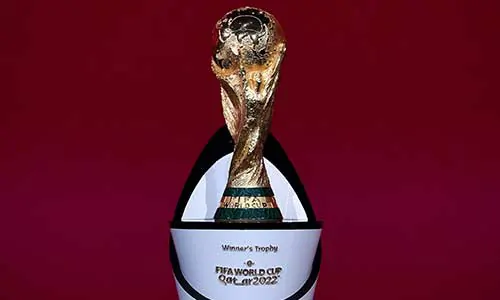
Gazzaniga’s design was a radical departure from the traditional cup. Instead of a goddess holding a chalice, his sculpture featured two dynamic human figures stretching upward to receive the world. This design beautifully symbolized the collective effort, joy, and triumph of athletic competition. “The lines spring out from the base, rising in spirals, stretching out to receive the world,” Gazzaniga famously described his creation.
The modern masterpiece boasts impressive technical specifications:
- Material: 18-karat solid gold (composed of 75% pure gold).
- Base: Two distinct rings of green malachite, a semi-precious stone.
- Height: 36.8 centimeters (14.5 inches).
- Weight: 6.175 kilograms (13.6 pounds).
- Structure: It is partially hollow, as a solid structure of those dimensions would weigh over 70 kilograms, making it far too heavy for athletes to lift.
This iconic design has become the universal symbol of football excellence. When we examine the FIFA World Cup Trophy History: Who Owns and Keeps the Original Cup?, it is this specific golden sculpture that captures the imagination of millions today. First lifted by West Germany’s Franz Beckenbauer in 1974, it remains the ultimate prize in global sports, and its safety is now of paramount importance to FIFA.
The Core Rules of FIFA World Cup Trophy History: Who Owns and Keeps the Original Cup?
Now, let us tackle the central question that confuses many casual fans: FIFA World Cup Trophy History: Who Owns and Keeps the Original Cup? The short and definitive answer is that the original, solid-gold trophy remains the permanent property of FIFA. It never leaves their custody permanently, and no country is ever allowed to keep it.
In the past, champions were permitted to take the original trophy back to their home country for exhibition purposes, keeping it under lock and key until the subsequent tournament drew near. However, following the tragic theft of the Jules Rimet Trophy and the skyrocketing value of the current solid-gold design, FIFA revised its security protocols. Since 2006, the original trophy has been housed permanently at the FIFA Museum in Zurich, Switzerland.
Today, the original trophy only makes highly controlled public appearances. It leaves the museum under armed security for the official FIFA Trophy Tour, the World Cup Final Draw, and the tournament’s opening and closing ceremonies. During the final match, the original is brought to the pitch for the post-match celebration. The winning team gets to experience the thrilling sensation of lifting the authentic 18-karat gold masterpiece, but they must return it to FIFA representatives shortly after the celebration concludes inside the stadium. This cycle is a cornerstone of the FIFA World Cup Trophy History: Who Owns and Keeps the Original Cup?.
Furthermore, the physical handling of the original trophy is restricted by incredibly strict rules. According to FIFA’s protocol, only a highly exclusive group of individuals is permitted to touch the authentic trophy with bare hands. This group includes former tournament winners (players and head coaches) and official heads of state. All other personnel, including event organizers and security staff, must wear white protective gloves when handling the prize.
Consequently, the question of the FIFA World Cup Trophy History: Who Owns and Keeps the Original Cup? highlights the supreme value and security surrounding this piece. The original trophy is a priceless historical relic, and FIFA treats it with the level of care usually reserved for the Crown Jewels or the Mona Lisa.
The FIFA World Cup Winner’s Trophy: What Champions Actually Keep
If the original trophy goes back to the safety of Zurich shortly after the final whistle, what do the winning players display in their home countries? To ensure the champions have a permanent reminder of their historic achievement, FIFA provides them with an official replica. This piece is officially known as the “FIFA World Cup Winner’s Trophy.”
How the Replica Differs from the Original
While the replica looks almost identical to the original to the untrained eye, there are several key differences in its construction and materials that are detailed within the FIFA World Cup Trophy History: Who Owns and Keeps the Original Cup? guidelines:
- Materials: Unlike the original, which is crafted from 18-karat solid gold, the winner’s replica is made of bronze that is meticulously gold-plated.
- Engraving: The replica is customized for the winning nation, featuring the year, the name of the host country, and the winning national association engraved on its surface.
- Ownership: The winning national football association gets to keep this gold-plated replica permanently. It is typically displayed in the national federation’s headquarters or toured around the country for local fans to enjoy.
This arrangement strikes a balance between historical preservation and celebratory joy. The players get to hoist the real, solid-gold artifact in their moment of triumph, while their national association receives a durable, beautiful replica to inspire future generations of footballers at home.
The Future of the Trophy: Looking Ahead to 2026 and Beyond
As the footballing world prepares for the historic 2026 World Cup—which is co-hosted by the United States, Canada, and Mexico—the allure of the trophy remains stronger than ever. The 2026 tournament marks a massive expansion, featuring 48 teams competing across North America. Despite these dramatic changes to the tournament’s scale, the physical trophy itself will remain the iconic 1974 design by Silvio Gazzaniga, cementing its place in the FIFA World Cup Trophy History: Who Owns and Keeps the Original Cup?.
However, one logistical challenge looms on the horizon for the physical trophy. The base of the trophy features a flat, circular plate where the names of the winning nations are engraved. This plate currently has enough space to accommodate the names of champions only up until the centenary edition of the tournament in 2038. After that point, the space on the current base will be completely filled.
FIFA has not yet officially announced how they plan to address this spatial limitation. Speculation suggests they may add a new ring to the base, redesign the engraving plate, or commission a third trophy design for the post-2038 era. Whatever the future holds, the rich legacy established in the FIFA World Cup Trophy History: Who Owns and Keeps the Original Cup? ensures that the symbol of football supremacy will always remain highly sought after.
Side-by-Side Comparison: Jules Rimet vs. Current Trophy
To help visualize the dramatic shift in design and scale over the years, let us compare the two historic trophies side-by-side in the table below. This visual breakdown is an essential part of the FIFA World Cup Trophy History: Who Owns and Keeps the Original Cup? narrative.
| Feature | Jules Rimet Trophy (1930–1970) | FIFA World Cup Trophy (1974–Present) |
|---|---|---|
| Designer | Abel Lafleur (France) | Silvio Gazzaniga (Italy) |
| Material | Gold-plated sterling silver, lapis lazuli base | 18-karat solid gold, malachite base rings |
| Weight | 3.8 kilograms (8.4 lbs) | 6.175 kilograms (13.6 lbs) |
| Height | 35 centimeters (13.7 inches) | 36.8 centimeters (14.5 inches) |
| Depiction | Nike, the Greek goddess of victory, with a chalice | Two human figures holding up the Earth |
| Permanent Keeper | Brazil (awarded permanently in 1970, later stolen) | FIFA (kept permanently at the FIFA Museum in Zurich) |
This table clearly shows how the trophy transformed from a relatively lightweight, classic silver-gilt sculpture to a heavier, highly robust solid-gold masterpiece designed to withstand the physical demands of modern athletic celebrations.
Why Understanding the FIFA World Cup Trophy History: Who Owns and Keeps the Original Cup? Matters Today
In a world where sports memorabilia has become highly commercialized, the World Cup trophy stands out as an un-buyable symbol of national pride. You cannot purchase the authentic trophy; it must be earned on the pitch through talent, determination, and teamwork. By understanding the FIFA World Cup Trophy History: Who Owns and Keeps the Original Cup?, fans gain a deeper appreciation for the grueling journey required to lift this prize.
Furthermore, knowing the strict protocols and security measures surrounding the original trophy emphasizes its status as a sacred cultural artifact. It is not merely a piece of metal; it is a repository of football history, carrying the invisible fingerprints of legends like Pelé, Diego Maradona, Zinedine Zidane, and Lionel Messi. This historical depth is precisely what makes the tournament so compelling to billions of viewers around the globe, showcasing how the FIFA World Cup Trophy History: Who Owns and Keeps the Original Cup? serves as a bridge across generations.
Frequently Asked Questions (FAQ)
To provide a quick summary of the most critical facts regarding the FIFA World Cup Trophy History: Who Owns and Keeps the Original Cup?, we have compiled answers to the most common questions surrounding this topic below:
Is the current FIFA World Cup Trophy made of solid gold?
Yes, the current trophy is made of 18-karat solid gold (75% gold and 25% alloy). However, the structure is hollow on the inside. If it were completely solid, it would weigh upwards of 70 kilograms, making it practically impossible for the winning players to lift and celebrate with on the pitch.
Who is allowed to touch the original World Cup trophy?
According to strict FIFA protocols, only a highly selected group of people can touch the original trophy with their bare hands. This group is strictly limited to players and managers who have won the World Cup in past tournaments, as well as official heads of state. Everyone else must wear protective white gloves.
What happened to the original Jules Rimet Trophy?
The original Jules Rimet Trophy was awarded permanently to Brazil in 1970 after their third tournament victory. However, it was stolen from the Brazilian Football Confederation headquarters in Rio de Janeiro in December 1983. It was never recovered, and historians believe it was melted down by the thieves for its gold content.
Do the World Cup winners get to keep the original trophy?
No, the winning nation does not get to keep the original solid-gold trophy. After the post-match celebration, the original is returned to FIFA. In its place, the winning national football federation is presented with a gold-plated bronze replica, officially called the FIFA World Cup Winner’s Trophy, which they keep permanently. This rule is a major highlight in the FIFA World Cup Trophy History: Who Owns and Keeps the Original Cup?.
Where is the original FIFA World Cup Trophy kept?
The original trophy is stored securely at the FIFA World Football Museum in Zurich, Switzerland. It only leaves the museum for official events, such as the FIFA World Cup Trophy Tour, the World Cup Draw, and the final match of the tournament under extremely tight security.
How much is the current FIFA World Cup Trophy worth?
While the raw material value of the gold is estimated at around $550,000 to $700,000 depending on market rates, the trophy’s historical and cultural significance makes it virtually priceless. Insurance valuations for the authentic piece often exceed $20 million, making it the most valuable trophy in all of sports.
Conclusion
The narrative surrounding football’s ultimate prize is a rich tapestry of artistic triumph, dramatic thefts, and meticulous security measures. From the classic elegance of Abel Lafleur’s Jules Rimet Trophy to the dynamic modernism of Silvio Gazzaniga’s solid-gold sculpture, the trophy has evolved alongside the beautiful game itself. Understanding the FIFA World Cup Trophy History: Who Owns and Keeps the Original Cup? highlights why this accolade remains the pinnacle of athletic ambition.
While the original 18-karat gold masterpiece will always remain safely in Zurich under FIFA’s watchful eye, the dreams of lifting it will continue to inspire young footballers across the globe. As we look forward to the next chapters of football history, the legend of the golden cup continues to grow, capturing the hearts of fans everywhere. Learning about the FIFA World Cup Trophy History: Who Owns and Keeps the Original Cup? is just the beginning of a lifelong passion for the beautiful game.
What do you think?
Which team do you think will earn the right to lift the legendary golden trophy at the next World Cup final? Share your predictions in the comments below, and don’t forget to share this article with your fellow football fans! For more official details on tournament rules, visit the official FIFA official website or check out historical archives on Encyclopedia Britannica.